Rahul Tiwari
khelja|14-08-2024
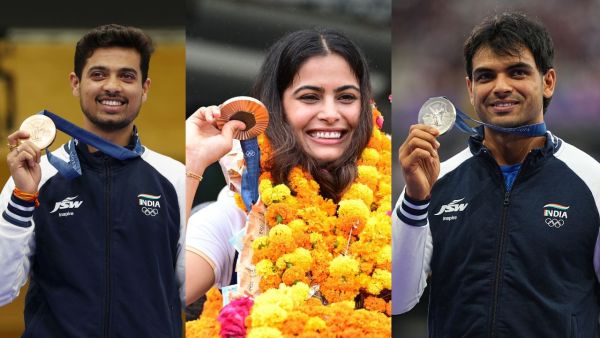
Apart from the Indian hockey team, 5 athletes raised the flag of India in the Paris Olympics. While Manu Bhaker won 2 bronze medals, the hockey team, Aman Sehrawat, Sarabjot Singh and Swapnil Kusale won one bronze each. Apart from this, Neeraj Chopra got the only silver for the country. After this success in Paris, money has rained on all these players. The central and state governments have announced a reward of crores of rupees for all of them. In such a situation, the question arises whether the government will also impose tax on this income of the players in the form of reward like the common citizens of the country? Let us know in detail about the prize money and the tax rules regarding it.
How much reward did the players get?
Before knowing the rules of prize money, it is important to know how much money each player has received. First of all, let's talk about Manu Bhaker and Neeraj Chopra. No reward has been announced for Neeraj yet. Last time, the Haryana government gave him Rs 6 crore for the gold medal. Under the Haryana government's scheme, Rs 4 crore can be received for silver. Manu Bhaker has already received Rs 30 lakh cash from Sports Minister Mansukh Mandaviya. Apart from this, the Haryana government has announced Rs 5 crore for two bronze medals.
Sarbjot Singh, who supported Manu in the mixed shooting event, has been given Rs 22.5 lakh by the Sports Ministry. Apart from this, the Haryana government has given Rs 2.5 crore for a bronze. He also got a job offer, but he refused. Swapnil Kusale, who won bronze, has been given Rs 1 crore by the Chief Minister of Maharashtra. Indian Railways has also promoted him from TC to OSD (Officer on Special Duty).
Apart from Kusale, the Sports Minister has given Rs 30 lakh to 21-year-old Aman Sehrawat, who won bronze in wrestling. Hockey India has announced Rs 15 lakh for each player of the Indian hockey team that performed in Paris and Rs 7.5 lakh for the support staff. Apart from this, the Odisha government has promised Rs 4 crore for Amit Rohidas, Rs 15 lakh each to the rest of the players and Rs 10 lakh each to the support staff. The Punjab government has also announced Rs 1 crore each for the players of its state who won bronze.
Will players have to pay tax?
So far you have come to know about the prize money of all the players. Now let us tell you how much tax will be levied on them. According to the rules of the Central Board of Direct Taxes (CBDT), there is no tax on the prize money received by any Olympic, Commonwealth or Asian Games medalist. In 2014, CBDT, through a notification, exempted the prize money of athletes winning medals in these tournaments from tax under section 10 (17A) of the Income Tax Act. However, if a prize of more than 50 thousand rupees is received from a private party, then tax will have to be paid on it.
In 2018, the Income Tax Appellate Tribunal gave a verdict on the prize money given to 2008 Olympic gold medalist Abhinav Bindra. He had received a total of Rs 96 crore, on which the tribunal said that the Indian shooter does not need to pay tax on it, because this money has been given to him as a reward by the government and is exempt from tax.
Is there tax on the cost of the medal?
Three types of medals are given in Olympics- Gold, Silver and Bronze. These medals have their own value. The price of the gold medal made in Paris is around 758 dollars i.e. around 63 thousand 357 rupees. Whereas, the price of the silver medal is 250 dollars i.e. around 20,890 rupees and the price of the bronze medal is 5 dollars i.e. around 417 rupees.
According to section 56 (2) of the Income Tax Act, property worth more than 50 thousand rupees is taxable. This section talks about taxing things like land, building, shares, securities and jewellery, which does not apply to medals. In this way, Indian players will not have to pay even a single rupee tax on the reward received from the government, because they have been exempted from this under the Income Tax Act.
Selection Dilemmas Loom Amid Weatherald’s Struggles and Labuschagne’s Return to Form
Mustafizur Rahman Controversy: BCB vs ICC - What Are The Rules?

[WATCH] Ashes 2025-26: Usman Khawaja's wife tears up as cricketer walks back for final time in international cricket
[WATCH] Rohit Sharma 'barely recognisable' in viral training video, sends social media into frenzy