
News Update
Tezzbuzz|19-07-2024
Rajasthan: Cricket is the only game in the world of sports which is called a gentleman's game. There are 2 umpires on the field to run a match smoothly without any dispute or debate, who have a very special role to play. The umpires keep a keen eye on the match and decide whether the batsman is out or not out. Although almost all the decisions of the umpires are correct, but they are also human beings… due to which human error is possible.
Why did the DRS rule come into cricket??
Many times umpires make mistakes in taking decisions and this has a huge impact on the match. In such a situation, the biggest cricket body ICC, after a lot of thought, devised a new rule so that this mistake does not have any impact on the match. This new rule, Decision Review System, which is called Nirnay Samiksha Pranali in Hindi, i.e. DRS rule was implemented.
What is the history of DRS
The game of cricket started in the year 1877, when the first international match was played. But DRS was introduced in international cricket after about 131 years. When we talk about the history of this rule, ICC used it in the test series played between India and Sri Lanka in Sri Lanka in the year 2008. DRS was initially used only in test cricket. Former Indian cricket team opener Virender Sehwag became the first player to be out due to the new rule of Decision Review System. Sehwag was declared not out in LBW by the field umpire, but after DRS the third umpire found Sehwag in front of the stumps and declared him out.
After its introduction in Test cricket, this system was included in the ODI World Cup played in 2011. Now understanding the importance of the Decision Review System in Test and ODI formats, the ICC also included it in T20 International cricket in 2017 and with this the system started being used in all three formats.
What are the advantages of DRS??
The umpire is also a human being, so it is natural for him to make human errors, but DRS was implemented so that this error does not affect any decision of the match. Today it is working very well and both the batting and bowling teams benefit from it. When the fielding team or the batting team feels that any decision of the umpire is wrong, they demand a Decision Review System by giving a T-shaped signal to the umpire. After which the TV umpire gives the correct decision after watching the replay from different angles. Both the teams benefit from this.
Types of DRS- Umpire Review, Player Review
If we talk about the rules of DRS on the cricket field, then there are two types of them, one is umpire review and the other is player review…
In umpire review, the field umpire present on the field takes help from the third umpire in case of any doubt on the decision of a catch, stump, run out, hit wicket, boundary check and after this, he gives the decision as per the advice of the third umpire.
Now let's talk about player review, in this, players of both the teams present on the field, be it batting team or fielding team… if they have doubts on any decision of the umpire, including catch, runout, LBW, or any other decision except time out, then they request DRS from the field umpire. But in this, teams have a limit on the number of DRS and time, in which teams get 2 reviews in ODI and T20 format, while in Tests they get 3 reviews. The decision of the review has to be taken within 15 seconds. For which a timer is installed.
How is DRS technology used?
Talking about the technology of DRS i.e. Decision Resolve System, it is a high technology. In which high-tech tools are used for ultra-motion cameras, sound, ball-tracking, sensors and thermal imaging. In this, Hawk Eye and ball-tracking technology are used in LBW or LBW decisions. In this technology, the line and length of the ball being thrown as well as the pitching of the ball is shown in which it is seen whether it would have hit the stumps or not according to the position of the batsman.
Apart from this, Hot Spot works on a different technology. Then it helps in determining the contact of the ball. This technology depends on infrared imaging and it shows whether the ball has made contact with the batsman's bat, pad or any other part or not. This decision is taken from this.
Now the most important technology in this is the use of scinometer or ultra edge. In which the decision of the batsman being LBW or caught out is taken. There are some equipments equipped with sensitive sensors in which the sound is detected when the batsman's bat or pad or in any other way touches the ball. For this, the third umpire takes the decision by checking the audio through ultra motion cameras.


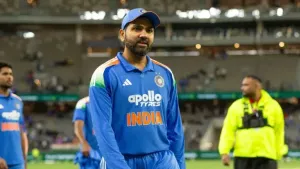
Rohit Sharma inspires teammates and opponents alike: Not just a match, a moment

Life imprisonment to three in murder and kidnapping case, court also imposed fine
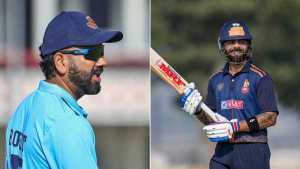
Rohit Sharma got so much money after scoring a century, Virat Kohli will not be able to buy even 3 bottles of water.
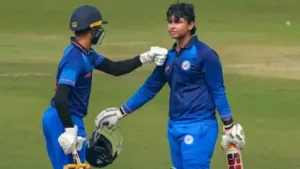
Biggest top-5 scores in List-A cricket