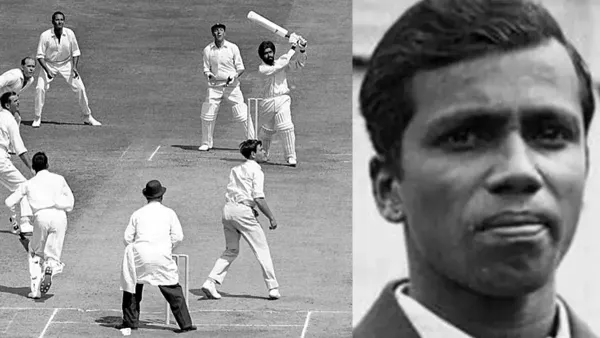
Delhi: There are many cricketers in India whose complete introduction is a far cry – the new generation may not have even heard their names. One such is Dattaram Hindlekar. He played 4 Tests between 1936 and 1946. Actually, the best years of his cricket were wasted in World War 2 and his poor fitness and on top of that, Tests were played very rarely in those days. Datta Hindlekar was a specialist wicketkeeper.
He could not play more than 4 Tests – this was his fate but he was a wonderful player. Wisden once considered him as one of the best wicket keepers from India. Hindlekar went on tour to England in 1936 and 1946 and played his 4 Tests there. In 1936, he made his debut in the first Test at Lord's and opened the innings (scores 26 and 17) but during the tour he suffered from a broken finger (some reports say the finger was cut off) and sudden blurred vision and played only one Test.
After this, he had accepted that his Test career was over but he was again included in the Test team in 1946. He was 37 years old then but after seeing his form in the final of the Bombay Pentangular Tournament of 1945-46, he was included in the Test team. This time, due to a back strain, he could not play in many tour matches. The second Test in Manchester needs special mention when he came to bat at number 11 and was on the pitch as the last pair with number 9 Sohoni. Defeat was imminent but he saved his wicket for 13 minutes and saved the Test as well. In his Test career, he got the opportunity to play both as an opener and at number 11. He was very cheerful and a very popular member of the touring team. His stance was much talked about at that time – he used to keep his feet at an angle of 45 degrees to each other.
Now let's talk about his family life. He had 7 children and the expenses of this big family often troubled him. As you read above, he was falling ill frequently. In those days, there was no money in cricket like today. Now he was lucky that he had a job in Bombay Port Trust. The salary was not very high and he got 80 rupees a month. He used to borrow playing equipment, even wicketkeeping gloves. He was in financial crisis and when he fell ill, whatever he had was also spent. That is why in his last days, he did not even get treatment in the hospital. BCCI and BCA (Bombay Cricket Association) did not help. At the very last moment, he was taken to Arthur Road Hospital in Bombay but it was of no use.
He was 40 years old when he died. It is clear that he did not leave anything for his large family of 7 children which would have enabled them to live comfortably. Appeals were made for help for his wife and 7 children. This time BCCI and Bombay Cricket Association did not help themselves but issued an appeal to the public to help his family. Nothing much happened. The help provided by Bombay Port Trust, where he worked, was also almost negligible.
What happened after this has no parallel in the world of cricket. Bombay Port Trust organised a cabaret show in August 1949, not a music programme, to raise money to help his family. They were not sure that people would come to the music programme. The profit of about 7 thousand rupees collected from the sale of tickets of this show was given to his family. This is a unique example of organising a cabaret to help a cricketer's family and also an amazing story in itself.