
Samira Vishwas
Tezzbuzz|23-09-2026
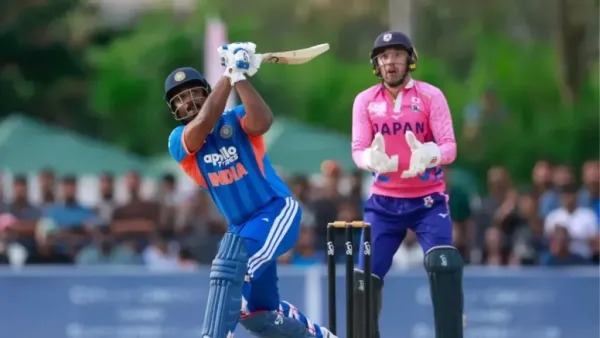
The Indian cricket team registered a thrilling victory by 2 runs in the only T20 historical international match played against Japan on Tuesday (22 September). Due to rain the match was reduced to only 5-5 overs.
Batting first, India scored 32 runs losing 4 wickets in 5 overs. In reply, Japan's team could score only 30 runs for 3 wickets. India won the match which lasted till the last ball, but questions were definitely raised on some decisions of the team.
Actually, the senior team is currently busy preparing for the upcoming white-ball series against West Indies. In such a situation, Gautam Gambhir and the main support staff were not with the team on the Japan tour. There were some decisions from India's side in this match which could have been taken in a better way. In this article we will mention those 3 mistakes that India made in the match against Japan.
3. Shivam Dubey should have been sent instead of Tilak Verma
India had more than two overs left in the innings, when Tilak Verma was sent to bat at number 5.
At that time, Japan was continuously bowling spin and it was clearly visible that their bowlers were going to bowl all the 5 overs with spin.The pitch was also quite slow and the ball was rotating well. In such a situation, it could have been more useful to send Shivam Dubey before Tilak Verma. Dubey is known for hitting big shots against spin and his strength could have been useful to the team on such a pitch.
However, Tilak got a chance to play only 3 balls and could score only 1 run. Dubey tried to play a big shot on the last ball, but he did not make contact with the ball.
India needed to score runs from every ball in this short innings. In such a situation, an attempt could have been made to bat more aggressively by sending Dubey first.
2. Abhishek Sharma should have taken the first ball
For Japan, left arm spinner Charlie Hara-Hinze took the new ball. Sanju Samson came on strike from India's side, while Abhishek Sharma was standing at the other end.
It could have been a better decision to give strike to Abhishek to take advantage of power play in the match of only 5 overs. One reason for this was that Abhishek could bat aggressively against spin from the very beginning.
Apart from this, the ball would have been coming inwards against Abhishek, which could have made it a little easier for him to make the shot. On the contrary, Sanju took some time in the beginning to understand Charlie's balls.
It was not easy to hit shots against Japan's spinners in the entire match. In such a situation, India should have tried to give strike to its most aggressive batsman from the very beginning.
1. Ravi Bishnoi should have reduced the speed of the ball
For India, Ravi Bishnoi bowled only one over and spent 10 runs in it.
In this over, Japan captain Kendall Kadowaki-Fleming also hit a four by playing a scoop over fine leg.Bishnoi usually bowls at a speed of more than 95 kilometers per hour. But bowling so fast on this slow pitch was not that effective for him.
It was easy for the Japanese batsmen to hit shots behind the wicket. In such a situation, Bishnoi should have tried to reduce the speed of his ball and force the batsmen to play big shots.
It is also true that Bishnoi's bowling style is naturally fast, so it was not easy for him to change his pace suddenly. Still, it was most important to stop the runs on such a slow pitch.
FAQ
Which 3 mistakes of India were in discussion in IND vs JPN 2026 T20I?
India's three biggest mistakes included sending Tilak Verma before Shivam Dubey, not giving strike to Abhishek Sharma on the first ball and Ravi Bishnoi not reducing the pace of his bowling.
By how many runs did India win against Japan?
India defeated Japan by 2 runs in a 5-5 over match. India scored 32/4, in response to which Japan could score only 30/3 runs.





Indian women's cricket team achieved a spectacular victory in the T-20 match.

Kanpur's Green Park will become UP's biggest cricket stadium, know the complete plan
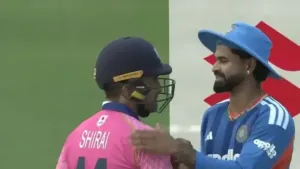
Japan nearly upset India, lose one-off T20I by 2 runs

India Survive Japan Scare! Escape With 2-Run Victory In Low-Scoring Thriller