

Shivam Sharma
abplive|25-10-2026
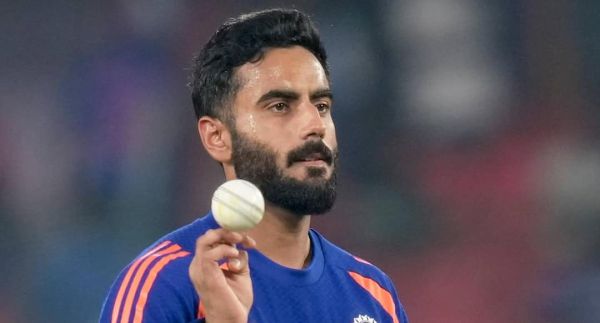
Team India may have discovered a new finishing option in Naman Dhir, whose explosive batting has made an immediate impact in the T20I series against New Zealand. The young batter delivered crucial contributions in the first two matches, strengthening his case for a bigger role in India's T20 setup.
His performances could increase the competition for places currently occupied by Rinku Singh, Washington Sundar and Shivam Dube.
In the opening T20I in Christchurch on October 22, India faced a challenging target of 226 runs. With the chase entering a crucial phase, Dhir produced a blistering unbeaten 42 off just 15 deliveries, striking five fours and two sixes.
His late assault helped India reach 230/6 in 19.4 overs and secure a four-wicket victory.Dhir continued to impress in the second T20I on October 24. With India under pressure, he contributed 31 runs off 17 balls, once again demonstrating his ability to score quickly when the team needs momentum.
His performances have strengthened his case for consideration as a finisher. However, consistent performances over a longer period will be important before his place in the squad can be considered secure.
Dhir has played six T20 Internationals, scoring 80 runs in five innings at a reported strike rate of 285.71. His highest score is an unbeaten 42, and he has hit seven fours and six sixes. He has also taken three wickets in the format, offering an additional bowling option.
1. Rinku Singh
Rinku Singh has established himself as a powerful finisher for India, particularly through his ability to accelerate in the closing overs and handle pressure. However, Dhir's recent performances provide the team management with another aggressive batting option.
If Dhir continues to deliver in difficult situations, the competition for a place in the lower middle order could become tougher.
Rinku's experience and finishing ability, though, remain important factors in selection decisions.2. Washington Sundar
Washington Sundar offers value through his all-round abilities, contributing with both bat and ball. His bowling can provide balance to the team, while his batting gives India flexibility in the middle order.
Dhir's emergence could intensify the competition for a spot, depending on the team's combination. However, the two players fulfil different roles, and Sundar's bowling skills could remain a key advantage in selection.
3. Shivam Dube
Shivam Dube is known for his power-hitting, particularly against spin, and can change the course of a match with his ability to clear the boundary. He also offers a different batting profile from Dhir.
The young batter's recent displays could create a selection dilemma if India want to accommodate multiple power-hitters. Ultimately, the choice will depend on the opposition, match conditions and the balance required in the playing XI.
Rather than automatically closing the door on Rinku Singh, Washington Sundar or Shivam Dube, Dhir's emergence is likely to make competition for places more intense.
The team management will have to weigh recent form against experience, bowling contributions and the specific requirements of each match.



Mitchell Santner scripts history, becomes first spinner with multiple four-wicket hauls against India

Mitchell Santner's Angry Reaction After Vaibhav Sooryavanshi Gets Lifeline Goes Viral | WATCH

Anrich Nortje ruled out of third Test against Australia as South Africa face selection dilemma

Tilak Varma Creates T20I World Record, Leaves Cricket Greats Behind