

Sandy Verma
Tezzbuzz|29-10-2026
When it comes to making a fairy tale comeback in sports, there is no room for errors. It has to happen right away. You need to hit that nostalgic note and make your transition from the domestic circuit to the international stage flawless.
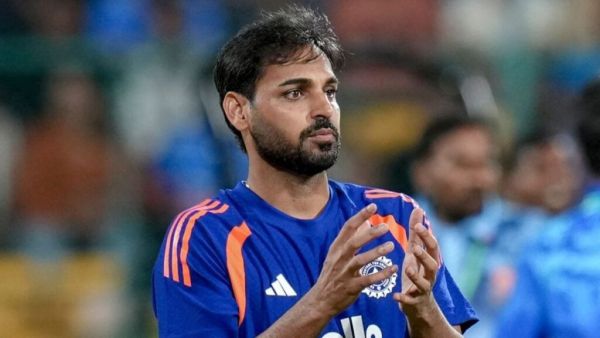
But Bhuvneshwar Kumar has had to endure a nightmare version of his much-anticipated return to the Indian team.
After taking 28 wickets at an economy of 7.95 for Royal Challengers Bengaluru (RCB) in a stellar IPL 2026, the 36-year-old was brought back into the fold ahead of the current T20I series against New Zealand. Jasprit Bumrah was rested and Arshdeep Singh was nursing an injury incurred during the West Indies series so a calm and experienced head was needed in the inexperienced Indian pace battery.
However, after just three games, Bhuvneshwar Kumar has returned with some disappointing statistics. In 12 overs, he has taken just one wicket and has conceded 139 runs. This has resulted in an average of 139.00 and an economy of 11.58.
Although the Indian team currently sit 3-0 up in the series after an impressive chase in 13.2 overs in the third T20I at Wellington, Bhuvneshwar Kumar has struggled with the flat pitches in New Zealand.
The swing-friendly conditions were expected to be a positive as he makes his return, but that has been far from the case.Here are three reasons why Bhuvneshwar Kumar's comeback may not be the solution to India's bowling issues.
1. Quick Loss of Early Dominance
Bhuvneshwar has been renowned for his mastery of playing with the new ball. He forces edges and gets people out early. However, against this series, he has struggled.
Although his first few overs have been tight, giving up just 5.00 (15 runs in 3 overs) he gives up quick runs once batters start attacking in his second over.
His 2nd over across all three games has gone for 40 runs at 13.33.Christchurch: 4 Runs in 1st over, 17 in 2nd (1 no ball)
Wellington: 4 Runs in 1st over; Finn Allen hit 2 huge 6's in the second over.
Without his late swing, the opposition have easily found a way of playing him at the start of the innings and hitting back in the middle of the powerplay.
2. Inconsistent Death Bowling
He was brought into the team originally for India due to a leak in the death period. His IPL was absolutely superb with his precision bowling.
He would use wide yorkers, good change of pace and just precision to stop oppositions getting on top.In international cricket, his intentions are clear, but his execution has been inconsistent:
| Match Phase | Overs Bowled (Series) | Boundaries Conceded | dots | Economics |
| Death Overs (16–20) | 4 | 5 | 1 | high |
This over summed up his current predicament.
His first ball was a fantastic yorker which only just managed to be pushed to the boundary by Bevon Jacobs. Then he tossed up a wide and a short, flat full toss that was punished for four. To finish the over he chipped up with three tight singles and a maiden.Having your best and worst ball come in the same over makes it difficult to hold down explosive lower orders.
3) The Future is Coming
One of the main issues Bhuvneshwar seems to face in becoming a long-term international is the flood of young fast bowlers coming through in India.
His lack of performance has shown how many young fast bowlers India has.
Nitish Kumar Reddy has bowled 11 overs in 3 games, taking 2 wickets at just under 10.00. He has been entrusted with bowling 2 19th overs by captain Shreyas Iyer and is quickly becoming a reliable death bowler.
Prince Yadav has impressed in his role. He has the best economy rate of any fast bowler in the team (9.25) along with Arshdeep Singh. He has also fit in well into all phases of the innings.
Mayank Yadav means the national selection committee has plenty of pace and T20 skills coming through with talents such as Yash Thakur and Ashok Sharma.
The Future
With only 2 games left in the New Zealand series, the veteran will need to perform quickly. As they have shown in the past, they are willing to make tough decisions. With a hectic domestic schedule and young talent knocking on the door Bhuvneshwar will need to turn his game around in the last games to show his fairy tale return has a part two.




Ranji Trophy LIVE score Today: Tamil Nadu needs 128 runs to win; Cyclone Arnab threatens to disrupt Andhra vs Chattisgarh

IND VS NZ: Crowd of spectators will gather in the fourth T20 match, all the seats of Eden Park Stadium are full.

All tickets for India-New Zealand fourth T20I sold out, a big record will be made at Eden Park
WPL Auctions 2027 : Live telecast and streaming, timing, purse left, and top players in focus