
Samira Vishwas
Tezzbuzz|10-11-2026
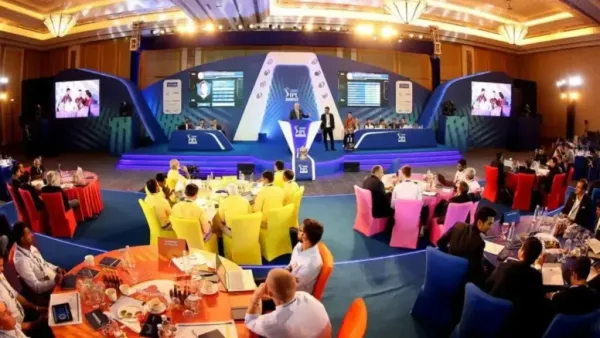
Delhi: The IPL mini-auction is going to be held in Goa on 16 December 2026, which is a big opportunity to make a team of your choice for the IPL 2027 season. For IPL, if we look closely at the way of making the team from the first season till now, it will not take long to understand that the thinking and strategy in this regard has all changed. How franchises prepare their teams is truly a puzzle that no one has been able to understand.
On one hand, there are scams like Delhi Capitals not taking Virat Kohli, KKR releasing Shubman Gill and Mumbai Indians bringing Hardik Pandya, while on the other hand, Rajasthan Royals are taking Vaibhav Suryavanshi cheaply.Still, a new strategy in the way of team building is the biggest discussion these days and there is no dearth of people believing that this strategy may overshadow the IPL auction in the coming years. This is the trade window, that is, outside the auction, mutual exchange of players at a fixed price through mutual negotiations between the franchises.
The Goa mini-auction is the last mini-auction of the current three-year round before the mega-auction to be held ahead of the 2028 season. Therefore, the focus is clear in front of every team that this is not a long term planning and according to the amount of money in your purse, now only make arrangements to remove the specific shortcomings. Even then, the focus is more on trades between players than the mini-auction. Look at the example of Hardik Pandya: At one time it seemed that 7-8 teams were in the market to take him from Mumbai Indians. This had never happened before for a player.
Instead of waiting for the mini-auction, teams are preferring to go straight to the 'trade window'. There is a list of benefits behind this change in strategy. See:
Expenses under control at full value: Be it an auction or a mini-auction, prices often go up significantly. Teams also spend a lot of money out of sentiment and in a vain race to win the bid like KKR did in the case of Venkatesh Prasad and Chennai Super Kings, in an emotional bid to get out of the 'Dad's Army' tag, spent a total of Rs 28.4 crore on two uncapped Indian players, Prashant Veer and Karthik Sharma in the IPL 2026 mini-auction.
When the team has more cash but less vacant slots, such a mistake often happens and even mediocre players are sold at a very high price. This mistake does not happen in trade because there is time to take any decision and bargain. Now see, Chennai Super Kings itself has set an example of correcting such a mistake. Recently, England's Liam Livingstone was traded from Sunrisers Hyderabad and with mutual consent his salary was reduced from Rs 13 crore to Rs 6 crore.
Direct and permanent replacement: Whoever is released before the auction, there is no guarantee that a right player will be found in his place.
This problem is solved in 'Direct Trade'. This was the reason for Rishabh Pant coming back to Delhi Capitals and Kuldeep Yadav going to Lucknow Super Giants in this window of 2027. In the case of Hardik Pandya and Arshdeep, both the teams gave maximum importance to the factor of the bowler bowling 4 overs for both of them.Chance to correct the mistake: The auction number and luck of the players are two big factors in the auction. In comparison, teams are negotiating to acquire the players they need. Considering the batting in their middle-order, Sunrisers Hyderabad traded Livingstone and in return took fast bowlers Khaleel Ahmed and Nathan Ellis from Chennai and made their team better balanced.
Still, it is not that the mini-auction (for IPL 2027) is useless and has no importance. The main objective of this mini-auction is to give the final shape to the team without any long-term planning. The expectation is that each team will retain a large part of its main squad and focus on buying specific backups, players to replace injured players, or some special associate/uncapped players in this auction.
Since the 'Impact Player' rule will remain in place in the 2027 season as well, teams do not need to make any major changes to their team combinations. Instead of completely changing the structure of the team, the mini-auction will be used only to add some useful backup players.
This mini-auction will also give each team an opportunity to prepare for the K mega-auction (which is expected to take place around December 2027) ahead of the 2028 season. Before that mega auction, there is talk of increasing the purse of each team to Rs 150 crores, hence for future planning also the aim will be to keep the right players in focus from now on.


Indian team announced for South Africa tour, Jemima returns
West Indies' victory in vain! Tauheed's historic batting led to Sylhet test draw
Jacob Bethell named in England’s Test squad for South Africa series

SMAT: Suryakumar Yadav named Mumbai captain; Shardul Thakur returns from finger injury