Samira Vishwas
Tezzbuzz|10-11-2026
Player trading has emerged as a major talking point ahead of the Indian Premier League (IPL) 2027 mini-auction, with franchises exploring deals to strengthen their squads and address key gaps before the new season.
Eight players have already switched teams through three completed trades involving Delhi Capitals (DC), Lucknow Super Giants (LSG), Sunrisers Hyderabad (SRH) and Chennai Super Kings (CSK).
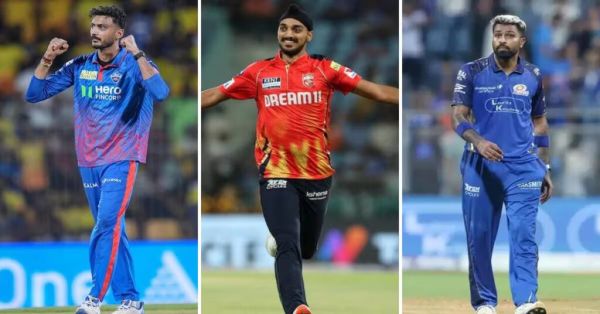
However, the biggest development involves Mumbai Indians (MI) all-rounder Hardik Pandya and Punjab Kings (PBKS) pacer Arshdeep Singh, whose proposed exchange is nearing completion. Several other players, including Delhi Capitals’ Axar Patel and Ashutosh Sharma, have also featured in trade discussions.
With the retention deadline approaching on November 17 and the mini-auction scheduled for December 16 in Goa, here is a look at the completed transfers, reported deals and IPL trading regulations.
IPL 2027: List of completed player trades
Three completed trades have resulted in eight players changing franchises ahead of the 2027 season.
The first major exchange took place between Delhi Capitals and Lucknow Super Giants, with former LSG captain Rishabh Pant returning to Delhi in exchange for left-arm wrist-spinner Kuldeep Yadav.
Pant, who joined Lucknow for Rs 27 crore at the IPL 2025 mega-auction, has moved to Delhi at a reported league fee of Rs 15 crore. Kuldeep, meanwhile, has joined LSG at his existing fee of Rs 13.50 crore.
Delhi Capitals and Sunrisers Hyderabad subsequently completed another exchange, with left-arm pacer T Natarajan moving to Hyderabad for Rs 5 crore, while leg-spinner Zeeshan Ansari joined Delhi at Rs 40 lakh.
The latest completed deal involved a four-player exchange between Chennai Super Kings and Sunrisers Hyderabad. England all-rounder Liam Livingstone and Australian seam-bowling all-rounder Jack Edwards joined CSK, while pacers Khaleel Ahmed and Nathan Ellis moved to SRH.
Livingstone joined Chennai at a reduced fee of Rs 6 crore, compared with his original Rs 13 crore contract with Hyderabad. Edwards moved at his existing fee of Rs 3 crore, while Khaleel and Ellis joined SRH for Rs 4.8 crore and Rs 2 crore, respectively.
Complete list of IPL 2027 completed trades
| Sr. Well. | Player | Trade From | Traded To | Trade Type | Amount (INR) |
| 1 | Rishabh Pant | Lucknow Super Giants | Delhi Capitals | Player Swap | ₹15 crore |
| 2 | Kuldeep Yadav | Delhi Capitals | Lucknow Super Giants | Player Swap | ₹13.50 crore |
| 3 | T.Natarajan | Delhi Capitals | Sunrisers Hyderabad | Player Swap | ₹5 crore |
| 4 | Zeeshan Ansari | Sunrisers Hyderabad | Delhi Capitals | Player Swap | ₹40 lakh |
| 5 | Liam Livingstone | Sunrisers Hyderabad | Chennai Super Kings | Player Swap | ₹6 crore |
| 6 | Jack Edwards | Sunrisers Hyderabad | Chennai Super Kings | Player Swap | ₹3 crore |
| 7 | Khaleel Ahmed | Chennai Super Kings | Sunrisers Hyderabad | Player Swap | ₹4.8 crore |
| 8 | Nathan Ellis | Chennai Super Kings | Sunrisers Hyderabad | Player Swap | ₹2 crore |
IPL 2027: Proposed player trades and latest rumours
Hardik Pandya: Mumbai Indians to Punjab Kings
The biggest proposed trade ahead of IPL 2027 involves Mumbai Indians all-rounder Hardik Pandya and Punjab Kings pacer Arshdeep Singh.
According to reports, the two franchises have exchanged Expressions of Interest (EOIs), taking the proposed deal into its final stages under the BCCI’s prescribed trading process.
Cricbuzz reported on November 10 that both players had given their consent, with the exchange of contracts remaining before the deal can be formally completed.
Under the proposed arrangement, Hardik will move to Punjab Kings, while Arshdeep will join Mumbai Indians. The exchange is expected to strengthen Punjab’s all-round options and provide Mumbai with an additional quality Indian fast bowler.
Multiple media reports have indicated that the deal is nearing completion, and fans can expect an official announcement in the coming days, subject to the completion of formalities and BCCI approval.
Interestingly, Hardik’s previous franchise switch also followed a similar sequence. Gujarat Titans included him in their retained players list on November 26, 2023, before his return to Mumbai Indians was officially announced on November 27.
Axar Patel: Delhi Capitals to Chennai Super Kings
Delhi Capitals all-rounder Axar Patel has been linked with a possible move to Chennai Super Kings.
The speculation gathered momentum after a social media interaction involving Axar and CSK captain Ruturaj Gaikwad sparked discussions about a possible move to Chennai.
Axar’s left-arm spin and lower-order batting could make him an attractive addition to CSK’s Indian core. However, there is no concrete evidence of an agreement between the two franchises, and the reported move remains speculative.
Ashutosh Sharma: Delhi Capitals to Gujarat Titans/LSG
Delhi Capitals batter Ashutosh Sharma has emerged as another potential trade candidate ahead of the November 17 retention deadline.
According to reports citing Cricbuzz, Gujarat Titans had approached Delhi Capitals regarding a possible trade for the batter a few months ago, although Delhi did not respond to the proposal at the time.
Gujarat Titans and Lucknow Super Giants have both been linked with the player, with a fast bowler potentially being offered in exchange.
Ashutosh, who previously represented Punjab Kings, scored 171 runs in eight matches during IPL 2026 at a strike rate above 180. His power-hitting ability could provide additional middle-order depth to either franchise.
Other players linked with possible IPL 2027 moves
Apart from the prominent names above, several other players have featured in trade discussions. However, their proposed movements have not been established through sufficiently reliable reporting.
Marcus Stoinis and Mohsin Khan have been mentioned in speculation about a possible Punjab-Lucknow exchange. Prasidh Krishna has also been linked with Delhi Capitals, although no concrete agreement has emerged.
IPL player trading rules: Everything you need to know
IPL player trading allows franchises to exchange players or acquire contracted players from other teams through direct negotiations. However, every deal must follow BCCI regulations and receive the necessary approval.
What are the types of IPL trades?
There are two types of player trades in the IPL: player-for-player exchanges and all-cash trades.
In a player-for-player trade, two franchises exchange players based on a mutually agreed arrangement. For example, in the proposed Hardik Pandya-Arshdeep Singh deal, Mumbai Indians would send Hardik to Punjab Kings in exchange for Arshdeep.
In an all-cash trade, one franchise transfers a player to another team without receiving a player in return. The two franchises agree on the financial terms, subject to IPL regulations and BCCI approval.
When can IPL teams trade players?
The IPL has two trading windows. The first opens seven days after the previous season ends and closes seven days before the next player auction. This is the window in which franchises negotiate trades before the auction.
The second trading window opens the day after the auction and remains active until 30 days before the next IPL season begins. Teams can continue to trade eligible contracted players during this period.
For IPL 2027, the current trading window is expected to close on December 9, seven days before the scheduled December 16 mini-auction. The second window will reopen on December 17.
How does an IPL player trade happen?
An IPL trade involves a formal process and cannot be completed simply because two franchises agree on a deal.
The process begins when the interested franchise submits an Expression of Interest (EOI) to the BCCI, naming the player it wants to acquire. The board then informs the player’s existing franchise, which gets 48 hours to respond to the proposal.
If the existing franchise agrees, the player is asked to sign a consent form. Once the BCCI receives the signed form, the two franchises can begin detailed negotiations over the trade. After agreeing on the financial terms and completing the required paperwork, the teams must obtain BCCI approval to make the transfer official.
Can a player refuse to be traded?
The answer is yes. A franchise cannot force a contracted player to move to another team. The player’s consent is compulsory, and he must sign the required BCCI consent form before negotiations can proceed.
How does money work in an IPL trade?
The financial arrangement depends on whether the player’s league fee remains unchanged, increases or decreases after the trade.
Trade at the existing salary: If a player is contracted for Rs 10 crore and moves to another franchise at the same amount, the buying team takes over the player’s Rs 10 crore league fee. This amount is included in the new franchise’s salary cap.
Trade at an increased salary: If a player’s existing league fee is Rs 10 crore but the buying franchise agrees to increase it to Rs 14 crore, the additional Rs 4 crore is shared between the player and the selling franchise. Under IPL regulations, the player’s share cannot exceed 50% of the increase. The final split is decided through the consent agreement.
Trade at a reduced salary
A player can also voluntarily agree to move to another franchise at a lower league fee. For example, if his existing contract is worth Rs 10 crore but he agrees to a reduced fee of Rs 8 crore, he must provide written consent to the reduction. The selling franchise pays the Rs 2 crore difference to the buying franchise for that season, while the player’s original contractual earnings remain protected under the prescribed arrangement. The BCCI must approve the arrangement.
Other important IPL trading rules
Franchises can trade multiple eligible players during a trading window, but a player bought at an auction cannot be traded for the season immediately following that auction. For example, a player purchased at the December 2026 auction for IPL 2027 cannot be traded for the same season.
Overseas players can also be traded, but the buying franchise must obtain a No Objection Certificate (NOC) from the player’s national cricket board.
There is no blanket ban on trading injured players. However, the buying franchise is responsible for checking the player’s fitness and may require a medical examination before completing the transfer.
The incoming player’s league fee counts towards the buying franchise’s salary cap, while payments between franchises arising from the trade are not included in the salary cap. The BCCI also has the authority to reject trades or impose penalties if it finds violations of IPL regulations.
IPL trading vs player auction: What is the difference?
Player trading and the auction are two different ways for franchises to build their squads. In a trade, two teams negotiate directly to exchange or transfer a contracted player. In an auction, franchises compete against each other by placing bids on players available in the auction pool.
The price in a trade is negotiated between the two franchises, while the auction price is determined through competitive bidding. Player consent is mandatory for a trade, whereas auction participation is governed by registration and contract rules. Both processes require BCCI oversight.
IPL 2027 salary cap and squad rules
Under the IPL’s 2025-27 player regulations, the total salary cap has increased from Rs 146 crore in 2025 to Rs 151 crore in 2026 and Rs 157 crore for the 2027 season.
The salary cap includes the auction purse, incremental performance pay and match fees. Each franchise can have a maximum of 25 players in its squad, including no more than eight overseas players.
There is no fixed retention limit for a mini-auction, subject to squad composition rules, and Right to Match (RTM) cards are not available at mini-auctions. Players also receive a match fee of Rs 7.5 lakh for each match they play, including the Impact Player.


IND vs NZ 3rd ODI: Toss Delayed Again! Latest Weather Update, Revised Match Timings
'A Lot Of Coaches Are Scared': Ex-India Coach's Big Revelation On Virat Kohli
Big blow to New Zealand in ODI series against India, two star bowlers out
NZ vs IND 3rd ODI delayed due to rain