

T20 World Cup 2026: Meet Saad Bin Zafar, Canada’s constant in a changing cricket ecosystem
sportstar
sportstar|11-02-2026
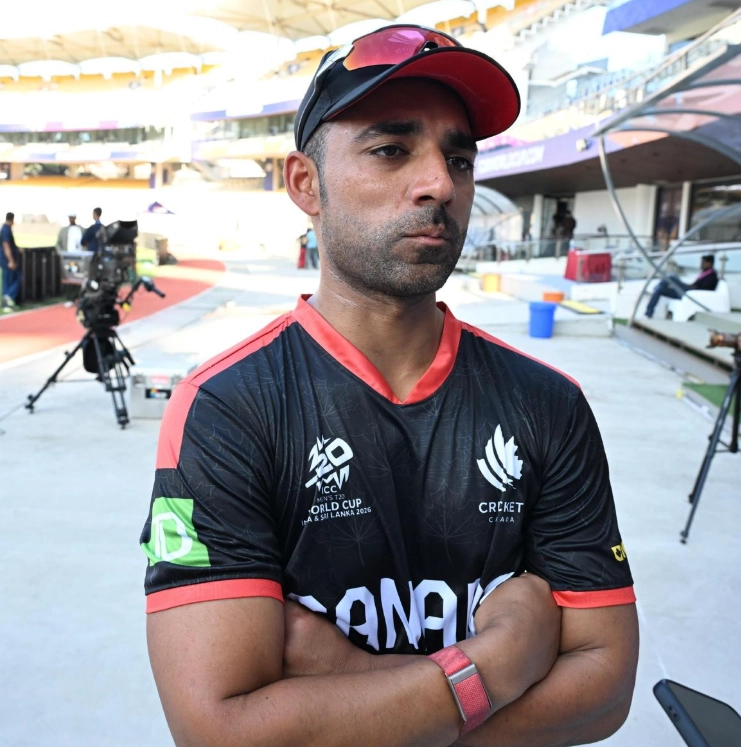
Few have been there and done it for Canada quite like Saad Bin Zafar. The oldest member of Canada’s squad for the upcoming T20 World Cup 2026, Zafar, has seen Canadian cricket in all its forms and will be the central figure as the side looks to turn heads in the coming weeks.
After Canada’s warm-up match against Nepal in Chennai, Zafar spoke with the calm of someone who has seen cricket grow from a fragile set-up into a team that will now go toe-to-toe with some of the world’s best. At 39, his journey has been shaped by migration, reinvention, and a long wait to make his mark at the highest level.
From Lahore to Canada, via club cricket
Zafar grew up in Lahore, where he played school cricket before moving to Canada at the age of 17 to pursue his education. “I was in high school, in Grade 11 and 12. My family wanted to make sure that I get a good degree and pursue my education there,” he remembered.
“After high school, I didn’t really know whether I should go towards engineering or business, but I chose to go on the business side. I did a Bachelor’s in Business Administration, and one of the reasons was that I was told that if I went into the business management programme, I would get some time to play cricket on the side,” he added.
While studying, Zafar discovered the world of club cricket. He rose through the circuit, representing Popeyes Cricket Club in the Super 9, the highest division of the Toronto Cricket League, when an unexpected opportunity arrived—Canada had come calling.
“It was never in the back of my mind that I was good enough to make it to the national side. I was playing in the highest league where the national players were being picked, and I was performing well, but it never crossed my mind that I was good enough,” Zafar recalled.
Fast starts and false starts
That initial call-up may have arrived quickly, but Zafar found himself out of the team just as quickly. Dropped after merely a handful of games, he would have to wait until 2015 to earn a recall. But he says he is a better cricketer for the wait.
“I was initially a left-arm fast bowler, and I had just become a spinner. So I was kind of a premature spinner, and though I had gotten the call-up, I wasn’t really ready for it,” he said. “When I got the call-up, I was dropped, but I had gotten the taste of it, and it made me realise that maybe I was good enough to get into the national team. From there onwards, I started becoming a student of the game.”
Zafar, who had never played any age-group cricket, spent those five years sharpening his craft and building the kind of game that could hold up at the international level. “That five-year-long period of waiting made me work on all those things because I said to myself, ‘I’m not sure whether I will get an opportunity again or not, but if I ever do, I will make sure that I grab it with both hands,’” he mused.
“I improved my craft, both mentally and cricketing skill-wise, and once I made a comeback in 2015, I was mature enough to know what to expect and how to survive at that level.”
Becoming a world record-holder
Zafar did not look back after that 2015 recall. He has been one of Canada’s most consistent performers in international cricket, contributing with both bat and ball, and was also called up to play for St. Lucia Zouks in the Caribbean Premier League. But his name hit headlines in November 2021 for a spell against Panama in the T20 World Cup Americas Qualifiers.
Canada dominated the first half of the innings, with Rayyan Pathan slamming a century as the team posted an imposing 245 for one in its 20 overs. With a mountain of runs behind him, Zafar then bowled a remarkable spell of 4-4-0-2, becoming the first player to send down four overs in a T20I without conceding a run.
It was a record he held alone until Lockie Ferguson emulated it against Papua New Guinea at the 2024 T20 World Cup.
“On that day, it was a turning point, and the situation was at a point where we scored 230-something (245). So we knew we had the game in our hands,” he remembered.
“The ball was coming out of my hand really nicely, and everything I was trying to execute, I was able to do that on that day. When I finished my spell, I didn’t even realise that I had bowled all four maiden overs; I was so into the game. When we walked out, it was my coach who told me that I had made a world record. I had to ask him what the record was!” he recalled with a glint in his eye.
Captaincy comes calling
Zafar also took over the national captaincy, a role he was initially unsure about taking up but one he credits with helping him grow as a person.
“I come across as more of a shy person. I’m not too talkative, but when I got the captaincy role, I knew that I had to work on that,” he said. “I’m dealing with different personalities, so at the end of the day, you can’t have only one way to convey messages to someone. I learned how to be flexible, how to communicate differently with different people, and how to have a stronger mindset as well.
“I grew up without any mentors, so I had a lot of self-doubt. But at a later age, I learned that everyone has those doubts. You just have to be out there and have a strong mind. All these things came to me after I became the captain.”
Zafar also credits former coach Pubudu Dassanayake for his support. “He used to actually make sure that I was making the right calls. We’d have a lot of discussions. Whether we’re winning or losing, I’d have a discussion with him about what I did right and what I did wrong. I’m big on learning. I believe if you come with the mentality that you know everything, that’s the day you start going down.”
Leading on the biggest stage
Under his captaincy, Canada achieved two historic milestones. In 2023, it reclaimed ODI status and qualified for the 2024 T20 World Cup, its first appearance at the shortest format’s biggest stage.
“It felt like a scene out of a movie,” Zafar recalled of the side’s opening match of the tournament in Dallas against the USA. “ICC did the opening ceremony as well during that time. So, there was this whole atmosphere before the game, and then we had to walk in for the national anthems and stuff. It just felt surreal, like a scene out of a movie. Sometimes you have to pinch yourself to realise that it’s actually happening to you. It was a blissful experience.”
Canada would lose that game by seven wickets, with Aaron Jones’ unbeaten 94 sealing the result. But six days later, it would produce yet another landmark moment as it defended 137 to defeat Test-playing nation Ireland by 12 runs in New York.
“We were quite down after losing a close game to the USA. So everybody picked themselves up. They had to find the self-belief that they’re still good enough to beat Ireland,” he remembered with a smile.
“The way everybody had self-belief, they supported each other. The bowlers stuck to their plan and executed it on the day. It went to the last over, and then when the game was finished, it just felt amazing. All the hard work that you have done behind closed doors, all the preparation that you have done coming to the World Cup, has actually paid off.”
The growing game in Canada
Having been in the set-up for as long as he has, Zafar has seen Canadian cricket rise, stall, and rise again. He is excited about the trajectory the sport is on in the country, even if there is plenty of room for it to grow.
“Right now, cricket is the fastest-growing sport in the country. When I was playing in my younger days, we only had a handful of grounds, but now we have close to a hundred grounds in Canada, many of which have floodlights as well. We have more natural turf wickets now. Before, we used to play on AstroTurf. So, infrastructure has grown a lot,” he related.
“There’s still more demand,” Zafar said. “There are more people out there who want to play cricket compared to the infrastructure and the available grounds. So we’re still catching up, but we have come a long way.”
Zafar himself held onto a corporate role until as late as 2019 and noted that relying on cricket as a sole income source is still tough. Canada’s reclamation of ODI status ensured that the players were on contract, but the financial picture remains uncertain. After the Global T20 Canada league was put on hold, those contracts were not renewed.
“If you can play a couple of leagues around the year, you can still maintain a good income from cricket. But it’s still not to the point where you can only rely on cricket income. You still have to have something as a backup because cricket is a very competitive sport,” Zafar said.
Onto 2026
Zafar is the senior figure in the Canada squad, which has a new, younger skipper in Dilpreet Bajwa at the helm. His role on the side, aside from his interventions with bat and ball, will also be to strengthen the leadership group with experience and perspective.
“For me, it’s about supporting each other, making sure I do my role properly, and then sharing my thoughts with them and assisting them with whatever the plans of the team are,” he said. “It’s more of a mentorship role, talking to players who are experiencing the World Cup for the first time about how to be in a positive mental space because that’s key to having good performance on the field.”
Canada will also head into Group D, alongside New Zealand, South Africa, Afghanistan, and the UAE, looking to make another statement. “We don’t actually, unfortunately, get to play a lot of competitive games against the bigger sides consistently. The World Cup is the only stage where we get to compete against the big nations,” he said. “But T20 is one format where anything can happen on the day, so I just want to play our fearless brand of cricket, be positive, and believe that we can do it. Then whatever happens, we’ll take it.”
After Canada’s warm-up match against Nepal in Chennai, Zafar spoke with the calm of someone who has seen cricket grow from a fragile set-up into a team that will now go toe-to-toe with some of the world’s best. At 39, his journey has been shaped by migration, reinvention, and a long wait to make his mark at the highest level.
From Lahore to Canada, via club cricket
Zafar grew up in Lahore, where he played school cricket before moving to Canada at the age of 17 to pursue his education. “I was in high school, in Grade 11 and 12. My family wanted to make sure that I get a good degree and pursue my education there,” he remembered.
“After high school, I didn’t really know whether I should go towards engineering or business, but I chose to go on the business side. I did a Bachelor’s in Business Administration, and one of the reasons was that I was told that if I went into the business management programme, I would get some time to play cricket on the side,” he added.
While studying, Zafar discovered the world of club cricket. He rose through the circuit, representing Popeyes Cricket Club in the Super 9, the highest division of the Toronto Cricket League, when an unexpected opportunity arrived—Canada had come calling.
“It was never in the back of my mind that I was good enough to make it to the national side. I was playing in the highest league where the national players were being picked, and I was performing well, but it never crossed my mind that I was good enough,” Zafar recalled.
Fast starts and false starts
That initial call-up may have arrived quickly, but Zafar found himself out of the team just as quickly. Dropped after merely a handful of games, he would have to wait until 2015 to earn a recall. But he says he is a better cricketer for the wait.
“I was initially a left-arm fast bowler, and I had just become a spinner. So I was kind of a premature spinner, and though I had gotten the call-up, I wasn’t really ready for it,” he said. “When I got the call-up, I was dropped, but I had gotten the taste of it, and it made me realise that maybe I was good enough to get into the national team. From there onwards, I started becoming a student of the game.”
Zafar, who had never played any age-group cricket, spent those five years sharpening his craft and building the kind of game that could hold up at the international level. “That five-year-long period of waiting made me work on all those things because I said to myself, ‘I’m not sure whether I will get an opportunity again or not, but if I ever do, I will make sure that I grab it with both hands,’” he mused.
“I improved my craft, both mentally and cricketing skill-wise, and once I made a comeback in 2015, I was mature enough to know what to expect and how to survive at that level.”
Becoming a world record-holder
Zafar did not look back after that 2015 recall. He has been one of Canada’s most consistent performers in international cricket, contributing with both bat and ball, and was also called up to play for St. Lucia Zouks in the Caribbean Premier League. But his name hit headlines in November 2021 for a spell against Panama in the T20 World Cup Americas Qualifiers.
Canada dominated the first half of the innings, with Rayyan Pathan slamming a century as the team posted an imposing 245 for one in its 20 overs. With a mountain of runs behind him, Zafar then bowled a remarkable spell of 4-4-0-2, becoming the first player to send down four overs in a T20I without conceding a run.
It was a record he held alone until Lockie Ferguson emulated it against Papua New Guinea at the 2024 T20 World Cup.
“On that day, it was a turning point, and the situation was at a point where we scored 230-something (245). So we knew we had the game in our hands,” he remembered.
“The ball was coming out of my hand really nicely, and everything I was trying to execute, I was able to do that on that day. When I finished my spell, I didn’t even realise that I had bowled all four maiden overs; I was so into the game. When we walked out, it was my coach who told me that I had made a world record. I had to ask him what the record was!” he recalled with a glint in his eye.
Captaincy comes calling
Zafar also took over the national captaincy, a role he was initially unsure about taking up but one he credits with helping him grow as a person.
“I come across as more of a shy person. I’m not too talkative, but when I got the captaincy role, I knew that I had to work on that,” he said. “I’m dealing with different personalities, so at the end of the day, you can’t have only one way to convey messages to someone. I learned how to be flexible, how to communicate differently with different people, and how to have a stronger mindset as well.
“I grew up without any mentors, so I had a lot of self-doubt. But at a later age, I learned that everyone has those doubts. You just have to be out there and have a strong mind. All these things came to me after I became the captain.”
Zafar also credits former coach Pubudu Dassanayake for his support. “He used to actually make sure that I was making the right calls. We’d have a lot of discussions. Whether we’re winning or losing, I’d have a discussion with him about what I did right and what I did wrong. I’m big on learning. I believe if you come with the mentality that you know everything, that’s the day you start going down.”
Leading on the biggest stage
Under his captaincy, Canada achieved two historic milestones. In 2023, it reclaimed ODI status and qualified for the 2024 T20 World Cup, its first appearance at the shortest format’s biggest stage.
“It felt like a scene out of a movie,” Zafar recalled of the side’s opening match of the tournament in Dallas against the USA. “ICC did the opening ceremony as well during that time. So, there was this whole atmosphere before the game, and then we had to walk in for the national anthems and stuff. It just felt surreal, like a scene out of a movie. Sometimes you have to pinch yourself to realise that it’s actually happening to you. It was a blissful experience.”
Canada would lose that game by seven wickets, with Aaron Jones’ unbeaten 94 sealing the result. But six days later, it would produce yet another landmark moment as it defended 137 to defeat Test-playing nation Ireland by 12 runs in New York.
“We were quite down after losing a close game to the USA. So everybody picked themselves up. They had to find the self-belief that they’re still good enough to beat Ireland,” he remembered with a smile.
“The way everybody had self-belief, they supported each other. The bowlers stuck to their plan and executed it on the day. It went to the last over, and then when the game was finished, it just felt amazing. All the hard work that you have done behind closed doors, all the preparation that you have done coming to the World Cup, has actually paid off.”
The growing game in Canada
Having been in the set-up for as long as he has, Zafar has seen Canadian cricket rise, stall, and rise again. He is excited about the trajectory the sport is on in the country, even if there is plenty of room for it to grow.
“Right now, cricket is the fastest-growing sport in the country. When I was playing in my younger days, we only had a handful of grounds, but now we have close to a hundred grounds in Canada, many of which have floodlights as well. We have more natural turf wickets now. Before, we used to play on AstroTurf. So, infrastructure has grown a lot,” he related.
“There’s still more demand,” Zafar said. “There are more people out there who want to play cricket compared to the infrastructure and the available grounds. So we’re still catching up, but we have come a long way.”
Zafar himself held onto a corporate role until as late as 2019 and noted that relying on cricket as a sole income source is still tough. Canada’s reclamation of ODI status ensured that the players were on contract, but the financial picture remains uncertain. After the Global T20 Canada league was put on hold, those contracts were not renewed.
“If you can play a couple of leagues around the year, you can still maintain a good income from cricket. But it’s still not to the point where you can only rely on cricket income. You still have to have something as a backup because cricket is a very competitive sport,” Zafar said.
Onto 2026
Zafar is the senior figure in the Canada squad, which has a new, younger skipper in Dilpreet Bajwa at the helm. His role on the side, aside from his interventions with bat and ball, will also be to strengthen the leadership group with experience and perspective.
“For me, it’s about supporting each other, making sure I do my role properly, and then sharing my thoughts with them and assisting them with whatever the plans of the team are,” he said. “It’s more of a mentorship role, talking to players who are experiencing the World Cup for the first time about how to be in a positive mental space because that’s key to having good performance on the field.”
Canada will also head into Group D, alongside New Zealand, South Africa, Afghanistan, and the UAE, looking to make another statement. “We don’t actually, unfortunately, get to play a lot of competitive games against the bigger sides consistently. The World Cup is the only stage where we get to compete against the big nations,” he said. “But T20 is one format where anything can happen on the day, so I just want to play our fearless brand of cricket, be positive, and believe that we can do it. Then whatever happens, we’ll take it.”
Related News


Latest Newsmore
George Munsey 84, late blitz lift Scotland to 207/4 versus debutants Italy
11-Feb-2026 • PTI

T20 World Cup 2026: Another big blow to Australia, this player will not play the first match
11-Feb-2026 • Sanjeev Kumar

Abhishek Sharma: Bad news for Team India, Abhishek Sharma admitted to hospital
11-Feb-2026 • Sanjeev Kumar

Sachin invited PM Modi, Rahul Gandhi to Arjun Tendulkar’s wedding, met him along with his family
11-Feb-2026 • Sanjeev Kumar

T20 WC: Sri Lanka's Hasaranga, New Zealand's Bracewell Ruled Out, Replacements Announced
11-Feb-2026 • CricketnMore