The Women’s Premier League (WPL) has a way of launching careers, sometimes in the space of a single over. As has been the case every season, several young talents stood out this year, but two in particular caught the eye: Anushka Sharma of Gujarat Giants and Nandini Sharma of Delhi Capitals.
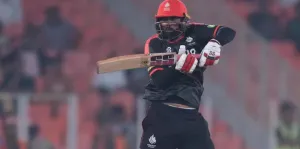
Anushka announced herself through quickfire cameos brimming with confidence. She rarely stayed long enough to pile up big scores, but her impact was immediate. In just her first WPL match, the 22-year-old struck a 30-ball 44 against UP Warriorz, piercing gaps in the field with her 360-degree batting skills.
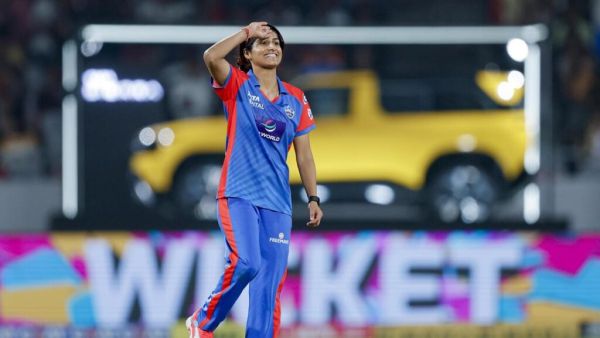
Nandini, a young pacer, picked up wickets across phases, proving especially lethal at the death with her back-of-the-hand slower ball. One over of hers stood out — four wickets, including a hat-trick, against Gujarat Giants — making her only the second Indian after Asha Sobhana to take a five-fer in the WPL. She finished the season with 17 wickets, the joint-most in the tournament, and claimed the Emerging Player of the Season award.
The season reinforced a familiar truth: when opportunity meets preparation, players can make an immediate mark.
Their rise may seem abrupt, that of an unknown name suddenly in the spotlight, but the groundwork is almost always in place. What the league does exceptionally well is facilitate discovery.While it can sometimes feel like a launchpad, the WPL is a place where players arrive raw and leave internationally ready. But the reality is more layered. As the league continues to expand the talent pool, the national women’s team cannot absorb every breakout star immediately.
Moreover, not every WPL breakthrough sustains its momentum.
For every player who turns a strong season into a permanent step forward, others stall after the initial surge. Sayali Satghare, Saima Thakor, Saika Ishaque, Kiran Navgire and Bharti Fulmali have all looked ready at different points, earned senior opportunities, yet struggled to hold their place.This season, however, has reopened doors for some. Strong WPL performances have brought Bharti and Sayali back into the national setup ahead of the upcoming tour of Australia, a reminder of how quickly the league can restore visibility.
The WPL certainly offers a month-long peak, but international cricket demands more than that.
What is required is consistent exposure to elite intensity. According to those working inside India’s development pipeline, the answer lies in what happens long before and after a WPL season. Anushka Sharma’s 360-degree strokeplay and calm confidence marked a player ready for the big stages.
| Photo Credit:
PTI
Anushka Sharma’s 360-degree strokeplay and calm confidence marked a player ready for the big stages.
| Photo Credit:
PTI
Engine room
Behind every player making an impact is a system designed to ensure readiness from the start. Age-group tournaments, emerging training camps and a layered development structure create a pathway that has proven highly effective, according to Nooshin Al Khadeer, who works closely with India’s domestic, emerging, Under-19 and A squads. “Domestic players who perform at Under-19, Under-23 and senior levels are picked for BCCI’s emerging age-group and target camps. They undergo these high-performance camps for three months, which are then backed with matches,” she told Sportstar.
The BCCI has long run these development programmes, focused on nurturing talent at every level. The months after the domestic season, from April to August, mark the real grind. The work behind the scenes has always existed, but the growing popularity of women’s cricket has finally put a spotlight on it.
Selection is only the entry point; what follows is sustained immersion. “There is a lot of skill work that goes on. Some may come in exceptionally skilled. But even if they are 20 per cent skilled, all of us in the coaching unit start working with them. Such players are identified throughout the year, via scouting and carefully maintained reports,” said Nooshin, who coached the Indian U-19 women’s side to consecutive World Cup titles.
“They spend so much time at the CoE (Centre of Excellence), using the facilities several times a day to constantly learn. It is useful preparation for these youngsters to be around the CoE, working with high-quality coaches and upgrading themselves. They are also given India A tours or Under-19 tours. It gives them that extra opportunity to rub shoulders with teams from other countries and understand the conditions,” Nooshin said.
Over the last two years, India A has toured Australia for all-format series against its A team, with seven matches each in both 2024 and 2025, offering vital exposure to a mix of capped and uncapped players. At the Under-19 level, preparatory series were held ahead of the 2023 and 2025 T20 World Cups—against New Zealand and South Africa in 2022, and in a triangular series featuring South Africa and two Indian teams, A and B, in 2024. These tours reflected a structured approach to ensure competitive exposure across levels.
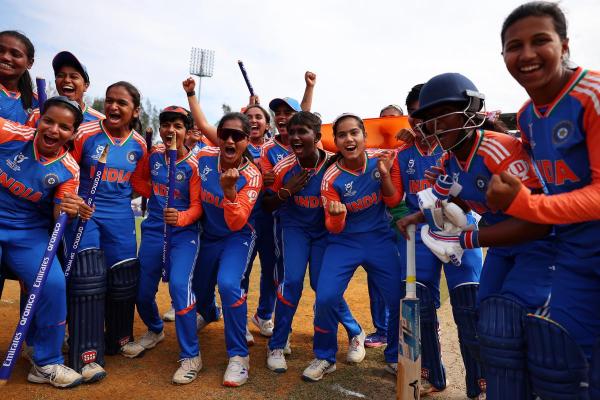
Ahead of both Under-19 Women’s T20 World Cups (in 2023 and 2025), there were preparatory series organised for the Indian side. They proved vital — in both editions, the Indian side was triumphant.
| Photo Credit:
Getty Images
Ahead of both Under-19 Women’s T20 World Cups (in 2023 and 2025), there were preparatory series organised for the Indian side. They proved vital — in both editions, the Indian side was triumphant.
| Photo Credit:
Getty Images
Forging the future
This continuity explains why many WPL discoveries arrive already tactically aware and mentally prepared. Their talent is unmistakable, but the shaping happens elsewhere. “Anushka was part of last year’s Emerging Camp. Triveni Vasistha also did well in that camp. Vaishnavi Sharma was not picked in the WPL, but she has been part of the high-performance camps for the last two years.
“In the last three domestic tournaments, Vaishnavi was the highest wicket-taker, which allowed her to don India colours, and from there she was picked for Mumbai Indians as a replacement,” Nooshin explained.
Nandini’s WPL season illustrates the same principle, which Nooshin attributes to months of preparatory work. “She has spent a good four months in the CoE. She was even in the standbys for the India A team against Australia last year. And then she backed it up with the WPL performance.”
Her path underscores an important truth: WPL success does not automatically fast-track national selection. “She may get an opportunity, she may not. We still have a lot of fast bowlers (in the senior side). But she is in the reckoning, at least in the T20 format. And the bench has been built, which we were lacking earlier.”
For Nooshin, this is the real shift. “There is a roadmap which has been set. The player is not stagnant anymore. There is something they are always looking forward to. So the road is never closed.”
Built for readiness
India’s current depth in women’s cricket is the result of groundwork laid long before the WPL, accelerated by a defining moment — the 2017 World Cup. Biju George, part of India’s coaching staff then, remembers the profound impact it had.
“The moment that tournament ended, we were offered full-time contracts by the BCCI. That’s when things changed,” Biju recalled while speaking to Sportstar.
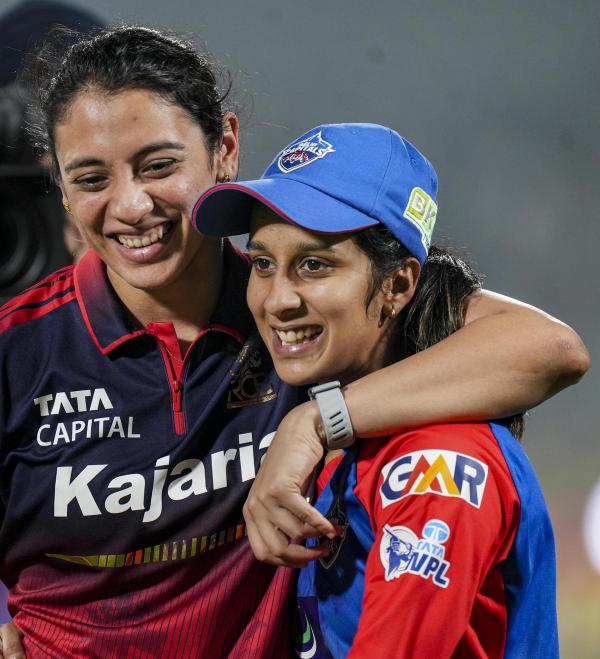
Captains Smriti Mandhana and Jemimah Rodrigues share a light moment after the WPL 2026 final. From a teenage talent who took part in early BCCI camps, Smriti’s journey to becoming a global icon reflects the impact of long-term investment in players. PTI
| Photo Credit:
PTI
Captains Smriti Mandhana and Jemimah Rodrigues share a light moment after the WPL 2026 final. From a teenage talent who took part in early BCCI camps, Smriti’s journey to becoming a global icon reflects the impact of long-term investment in players. PTI
| Photo Credit:
PTI
The BCCI moved from sporadic support to sustained investment, a transformation championed by former India captain Diana Edulji. What followed were structured programmes — Northeast camps, zonal camps and age-group initiatives — designed to cast a wider net and retain talent longer.
Biju had already seen the foundations of that blueprint taking shape earlier. He was involved in one of the first dedicated women’s Under-19 camps with full BCCI backing, held in Guntur in 2013-14, featuring several players who have gone on to become stars today.
“The girls selected were around 15 and 16. Smriti Mandhana, Deepti Sharma, Meghna Singh and Sneha Deepthi—all of them were there. That was probably the first proper Under-19 camp,” he said.
Over a decade later, these pathways continue to churn out talents equipped to jump straight into intense match situations.
For this reason, Biju feels that A tours and even the Emerging Cups, though useful, often lack the right level of competition. “If India was allowed to field two teams, they would meet in the final. We are streets ahead,” he quipped.
If the pipeline builds readiness, it is the WPL that tests it like nothing domestic cricket can fully simulate. “The WPL, I believe, is even on a higher pedestal than an international match. Because the best of the best are here,” he said.
Is it enough?
There are sufficient reasons to believe the current structure is robust, but, as with any high-performing development system, it is never a finished product. “As of now, I think we are on the right track,” Nooshin said. “There is a pre-planned six-month cycle. Even if there are loopholes, they are corrected quickly.”
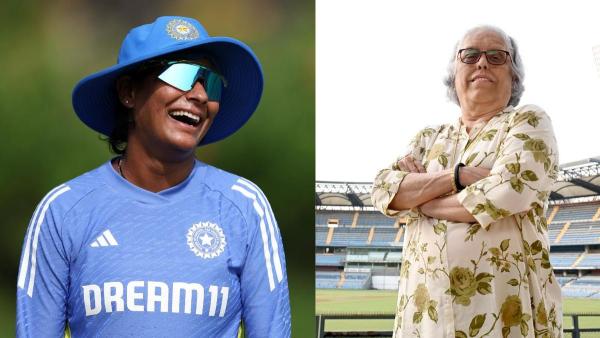
Diana Edulji (right) championed BCCI’s shift from sporadic support to sustained investment in women’s sport, and today, Nooshin Al Khadeer (left) oversees Emerging camps, preparing players for higher competition.
| Photo Credit:
Getty Images
Diana Edulji (right) championed BCCI’s shift from sporadic support to sustained investment in women’s sport, and today, Nooshin Al Khadeer (left) oversees Emerging camps, preparing players for higher competition.
| Photo Credit:
Getty Images
Biju echoes that confidence. “What we have right now is the best in the world. There is also a sense of financial security the domestic model now provides, with match fees and WPL base prices.”
The gaps today, according to them, are more about refinement.
For Biju, it is technical: “I wish all cricketers, especially bowlers, had access to Kookaburra balls throughout the year. They behave very differently. It makes a big difference.”
For Nooshin, it is about opportunity and role clarity. “There are so many players who fill gaps in WPL teams. I would love to see them play in the order they play in the domestic circuit.”
Such distinctions matter because, while the WPL sparks possibility, the real fire—experience, up-skilling and mental conditioning—is kept alive elsewhere. It provides a dependable base as India charts its path to the 2026 T20 World Cup and beyond.
Players like Nandini and Anushka had their moments on the biggest stage. What sustains them—and what will decide who is ready when India needs them next—is the factory behind the scenes, quietly shaping them to step in without breaking stride. That is part of the story that matters more.
Published on Feb 11, 2026