
Samira Vishwas
Tezzbuzz|22-02-2026
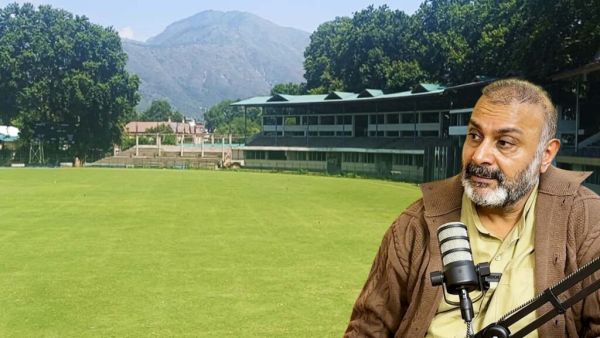
As the Jammu and Kashmir team storms into its maiden Ranji Trophy final, the cricketing fraternity is taking notice. The Federal spoke to senior sports journalist Chandra Shekhar Luthra about the team’s dramatic transformation, the rise of Auqib Nabi, and whether this could mark a turning point for Indian fast bowling.
According to Luthra, this is more than a cricketing milestone for Jammu and Kahsmir; it is a unifying moment for a region long marked by division. “India needs a new champion,” he added.
Excerpts from the interview:
Jammu and Kashmir were long considered minnows in domestic cricket. What changed this season?
“I think there was always great potential in this team. But because of the problems between the two regions — Jammu and Kashmir — the team was divided on the field. Even in the ’80s and ’90s, I watched them closely when they played in Himachal, Chandigarh or Delhi. That divide never allowed them to realise their true potential.
“In the last three seasons, the transformation has come because of one person — their chief coach, Ajay Sharma.
I have seen him play, even for India. He has been a tremendous force behind this turnaround. He gave them confidence and told them: you have potential, you just need to come together, play as a unit, and forget the results.Also read: Ranji Trophy final: Karnataka to face Jammu and Kashmir
“Last season, they missed the semi-finals by one run. That belief came from Ajay Sharma. They started this season with a loss to Mumbai in Srinagar, but after that, they began beating big teams — Delhi in Delhi, Madhya Pradesh in MP, and others. In a group that had teams like Madhya Pradesh, Delhi, Mumbai and Hyderabad, they were fifth favourites.
Yet they made it through.”How important was Paras Dogra’s leadership in this revival?
“Paras Dogra brought immense confidence. I have watched him for almost 20 years. He is a seasoned player and a passionate cricketer. His leadership changed the entire scenario.
“They beat Hyderabad, almost beat Delhi, and then defeated Bengal in Bengal. And look at Bengal’s attack — Mohammed Shami and Akash Deep. Shami may be out of favour, but any day I would pick him. He is a complete bowler — seam, swing, cutters, everything.
If you beat a side with that kind of bowling, it says a lot.”You mentioned Bishan Singh Bedi’s stint in Jammu and Kashmir years ago. Did that lay the foundation?
“Yes. I spent a lot of time with the late Bishan Singh Bedi. He was a very tough taskmaster. When he coached Delhi, many senior players retired because they couldn’t handle his routine.
“He told me there was a lot of talent in J&K, but the problem was rivalry and groupism. He spotted good spinners and said the rivalry had to end. He was given a free hand.
Also read: Jammu & Kashmir enter Ranji Trophy final for first time in 67 years
“Similarly, Ajay Sharma has been given freedom. Under Mithun Manhas — whom I respect as a player — the team has moved upward. This final is the pinnacle so far.”
They now face Karnataka in the final. Is this the ultimate test?
“It is definitely a testing time. Reaching the final and not winning would hurt. Paras Dogra may not play many more seasons. This is their moment to prove they are not just participants.
“Karnataka is a star-studded side — KL Rahul, Mayank Agarwal, Karun Nair. Playing in Bengaluru gives Karnataka home advantage, and I don’t understand why the BCCI didn’t choose a neutral venue. But J&K have won away games already.
“This will be bowling versus batting — J&K’s bowling against Karnataka’s strong batting. They have also shown batting depth, scoring nearly 700 in an away game. That is never easy in domestic cricket.”
Auqib Nabi has taken 55 wickets at an extraordinary average. What makes him special?
“The difference between a good and bad bowler is length — the ability to hit the same spot again and again. That is what great bowlers like Glenn McGrath did.
Also read: India Women beat Australia to clinch historic T20I series win
“I remember Nabi as a raw talent — quick, tall, generating pace even on dead wickets. But now he has improved his length and discipline. That has changed everything. He has 55 wickets at an average around 12 — unimaginable in domestic cricket.
“He is also a local leader. Paras Dogra and Ajay Sharma are outsiders, but Nabi understands the sentiments of players from both Jammu and the Valley. That leadership matters.”
Umran Malik is not even in the playing XI. Does that show depth?
“Absolutely. If you ask an outsider, the first name after Nabi would be Umran Malik. Yet he is not in the XI. That is strength, not weakness.
“He needs to regain fitness and rhythm. He bowled at 150–160 kmph. He has time. He must learn the art of bowling, refine his skills, and work with the NCA and support staff.”
Is this final crucial for national selection?
“Yes. To come into the selectors’ radar, you must perform in red-ball cricket. The Ranji Trophy is four-day cricket. Look at Vidarbha, Madhya Pradesh — their players knocked on the doors after winning titles.
Also read: Suryakumar Yadav backs Tilak Varma despite slow start in T20 World Cup
“Selectors will watch this final closely. If Nabi takes early wickets against K. L. Rahul and bowls with the same wrist position and discipline, nobody can stop him.
“India needs a proper new-ball bowler. If Hardik Pandya is opening the bowling, India has a problem. We need a genuine fast bowler. It could be Nabi or someone else.
“I wish Jammu and Kashmir win — not against Karnataka, but because India needs a new champion.”
(The content above has been transcribed from video using a fine-tuned AI model. To ensure accuracy, quality, and editorial integrity, we employ a Human-In-The-Loop (HITL) process. While AI assists in creating the initial draft, our experienced editorial team carefully reviews, edits, and refines the content before publication. At The Federal, we combine the efficiency of AI with the expertise of human editors to deliver reliable and insightful journalism.)


Ellyse Perry Becomes First Australian To Play 350 International Games

Jemimah Rodrigues Completes 2500 T20I Runs

Rain Go Away: Harry Brook Says England Ready For Sri Lanka Disruption

T20 WC: India Vs South Africa Head-to-head Record And Last Five Matches' Performance