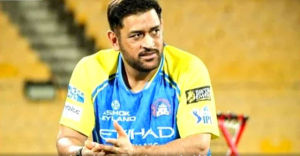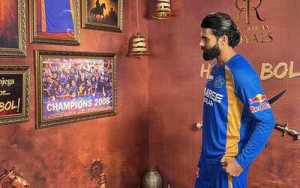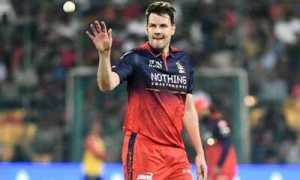
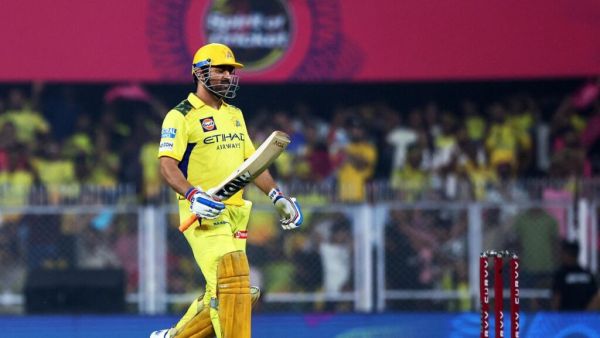
There is a particular kind of silence that trails MS Dhoni’s absence from the opening stretch of Chennai Super Kings’ IPL 2026 campaign.
Not the loud, performative kind that surrounds superstars, but something subtler, almost disorienting, as if a familiar rhythm has been briefly interrupted. For nearly two decades, CSK has been built around that rhythm.
A calf strain, on the face of it, is routine in a long career that has absorbed far heavier blows. Yet context alters weight.
Dhoni, who turns 45 this year, has increasingly managed his body alongside his role, and even short absences begin to reshape how responsibility is distributed within the side.READ | M.S. Dhoni – Age catches up with even the evergreen CSK talisman
There is, too, the timing. The early weeks of a season are less about urgency and more about calibration — refining combinations, settling roles, establishing tempo. In Dhoni’s long stewardship, much of that work happened almost instinctively. Without him on the field, those instincts will need to be articulated and, at times, shared.
Ruturaj Gaikwad was appointed CSK skipper last season.
| Photo Credit:
REUTERS
Ruturaj Gaikwad was appointed CSK skipper last season.
| Photo Credit:
That redistribution will sit most visibly with Ruturaj Gaikwad. As captain, he remains the central decision-maker, but the texture of those decisions is likely to shift. Dhoni’s presence often compressed time — choices made quickly, fields adjusted almost pre-emptively. In his absence, processes may stretch a fraction longer, conversations may broaden, and leadership may become a touch more collaborative.
This is not a rupture so much as a rebalancing.
Not merely who leads, but how leadership is expressed when its most influential voice is not immediately present. CSK’s long-held strength has been clarity — roles understood, expectations rarely ambiguous. The coming games will test how that clarity holds when it has to be voiced more explicitly.Within that framework, Sanju Samson’s role becomes quietly significant. His arrival from Rajasthan Royals adds experience and flexibility, particularly as a wicketkeeping option, but also as a sounding board within the group. Not a parallel authority, but an additional layer of cricketing intelligence around Gaikwad.
There are, too, the smaller adjustments that tend to escape notice until they accumulate. A bowler walking back with a question rather than a nod. A field set with a brief pause instead of immediate certainty. A review decision that travels through one extra voice. None of these alter outcomes on their own, but together they begin to reshape the cadence of a team.
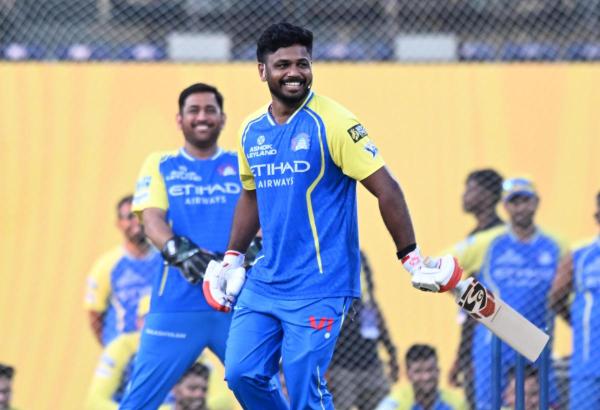
Samson, right, adds experience and flexibility at CSK, particularly as a wicketkeeping option, but not as a direct successor to Dhoni.
| Photo Credit:
R. RAGU
Samson, right, adds experience and flexibility at CSK, particularly as a wicketkeeping option, but not as a direct successor to Dhoni.
| Photo Credit:
R. RAGU
READ | CSK season preview IPL 2026
Dhoni’s influence, of course, does not disappear with his absence. It lingers in habits, in patterns of thinking, in the muscle memory of a side that has operated under him for years. If anything, this phase offers a view of how deeply those ideas have taken root — whether they function as instinct or require prompting.
And when he returns, as he is expected to, those rhythms will likely settle again, though not without having absorbed these small variations. That, perhaps, is the quieter value of this period. Not a break from the Dhoni era, but an extension of it in a slightly different form.
For CSK, then, this is less about confronting a future and more about understanding its present more clearly — how it functions, how it adapts, and how responsibility travels when the centre briefly shifts.
Published on Mar 29, 2026