
CricTracker
newspoint|16-04-2026
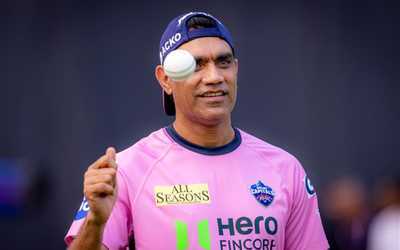
Former India pacer Munaf Patelhas voiced serious concerns over the declining state of fast bowling in Indian cricket, warning that the art of reverse swing could soon fade into history.
Munaf, a key member of the Indian team that famously won the ODI World Cup in 2011 under MS Dhoni's captaincy, attributed the issue largely to the saliva ban introduced during the COVID-19 pandemic – a rule he believes should have already been revoked.
“It depends on who is making the decisions. If you have the right people, cricketers, they will understand that saliva should be allowed. But when you have put office bearers in charge, they simply don’t know,” the former cricketer said on Bombay Sport Exchange as quoted by The Times of India.
The 2011 World Cup winner explained that sweat alone cannot replicate the effect of saliva when it comes to generating reverse swing. He further elaborated on the science behind it, stressing the role of sugar in thickening saliva.
“Paani se nahi aata hai (It doesn’t work with water) Vo saliva mein aap jo agar koi chewing gum khate ho ya koi jelly khate ho toh usse thoda mota ho jaata hai, sugar ki wajah se,” he continued. (Whatever you eat, chewing gum, jelly — it thickens the saliva because of the sugar. That’s what makes the difference], Munaf explained.
Without this, the current bowling coach of Delhi Capitals in IPL 2026 fears that reverse swing could soon disappear from the game.
“Aane wale paanch chhe saal mein toh reverse swing bhool bhi jaayenge. Wo dekhenge sirf YouTube mein (In the next five or six years, people will forget reverse swing entirely. They will only see it on YouTube)," Munaf exclaimed.
However, the saliva ban is just one part of a larger issue, according to the former pacer. Munaf pointed out that the growing dominance of franchise cricket, especially the Indian Premier League, has shifted focus almost entirely to white-ball formats, leaving red-ball cricket neglected at the domestic level.
He also expressed concern over the lack of genuine pace bowlers emerging through the system.
“If you ask me for bowlers who bowl at 125 kph, I’ll bring you a truckload. But if you ask me for bowlers who bowl at 140 plus, I may not even be able to fill a car,” he concluded.
He represented India across all three formats, featuring in 13 Tests, 70 ODIs, and 3 T20Is. In the longest format, Munaf picked up 35 wickets in 13 matches. However, it was in ODIs where he made a more significant impact, scalping 86 wickets in 70 matches. Munaf was also an integral part of India’s historic triumph in the ICC Cricket World Cup 2011.


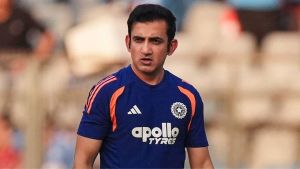
BCCI To Sack Gautam Gambhir As India Coach? Here's What We Know
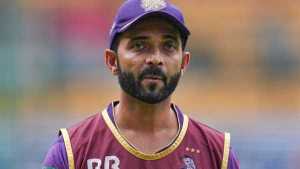
IPL 2026: Who will captain KKR in place of Ajinkya Rahane?
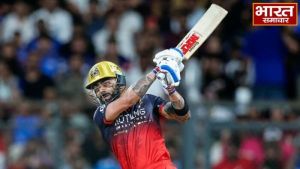
RCB vs LSG: Suspense on Virat Kohli’s fitness, will he play an important match today?, Star’s injury increased the tension of fans…
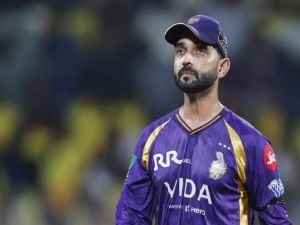
IPL 2026: This happened for the first time in 18 years, KKR registered a shameful record