

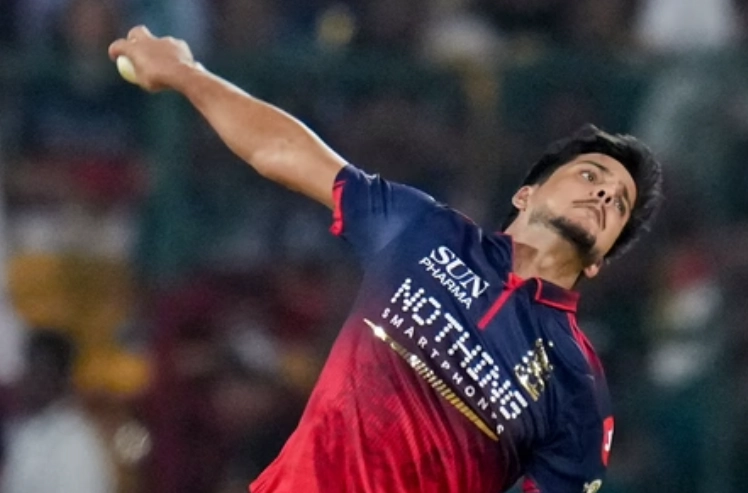
Rasikh Salam's spell against LSG was worth nearly 9 Tata Sierras for RCB, and it turned a ₹6 crore tag into a statement
Probuddha Bhattacharjee
Hindustantimes|16-04-2026
Royal Challengers Bengaluru did not just beat Lucknow Super Giants at the Chinnaswamy on Tuesday night. They produced one of those wins where the scoreline looked comfortable, but the real shift happened much earlier, when one bowler kept punching holes into the innings and never really let the other side settle.
That bowler was Rasikh Salam. His figures of 4/25 were sharp enough on their own, but the value of the spell becomes even clearer when viewed through the lens of match worth. In our model, Rasikh’s return from this game comes to ₹1.0486 crore. Put that against the Tata Sierra’s starting ex-showroom price of ₹11.49 lakh, and RCB effectively got a spell worth nearly nine Tata Sierras.
RCB chased down 147 in 15.1 overs and won by five wickets. Virat Kohli made 49, the batting stayed in control, and the finish looked easy. But that kind of chase only becomes possible when the bowling side has already cut the game down to size.
LSG never fully escaped that squeeze. Mitchell Marsh got 40, there were bits of resistance, and some late runs arrived, but the innings kept losing shape at the wrong moments. Rishabh Pant’s injury interruption only added to the disruption. The total of 146 was not one of those scores that looked 20 short only in hindsight. It already felt undercooked because RCB had kept landing blows.
Rasikh’s spell did not belong to one phase
That is what made this performance more meaningful than a standard four-for. Rasikh did not turn up at the end and collect lower-order wickets after the damage had already been done by others. He hit the innings across phases.
He removed Aiden Markram early. He came back to get Ayush Badoni in the middle. Then he closed with the wickets of Mukul Choudhary and Avesh Khan. That spread matters in T20 cricket. A wicket in the powerplay changes intent. A wicket in the middle overs slows recovery. Wickets at the death prevent the last surge that often rescues a batting effort.
His over-by-over spell tells the same story. The first over went for 10 but brought a wicket. The second cost just 2. The third gave away 6 and brought another breakthrough. The last one went for 7 and produced two wickets. There was one boundary threat in that final stretch, but he recovered instantly. That is composure.
He also delivered 12 dot balls in his 24 deliveries and conceded only three boundaries in the spell. So the impact was not built only on wickets. It was built on control.
Why the ₹6 crore matters
Rasikh Salam’s night becomes even more interesting when placed beside the money RCB committed to him. He entered the IPL 2025 auction with a base price of ₹30 lakh and was eventually bought by RCB for ₹6 crore. The franchise then retained him for the same amount for IPL 2026.
That means this is not the story of a low-cost gamble unexpectedly coming good. This is a team backing a player with real money and waiting for performances that justify the call. In the IPL, that context always matters. A four-wicket haul from a bargain buy is a pleasant surprise. A four-wicket haul from a ₹6 crore player feels different. It feels like a return.
And that is where the Sierra line stops being a gimmick and starts becoming useful framing. Numbers like ₹1.0486 crore can sound big and remain abstract. Nearly nine Tata Sierras give the figure shape. It makes the return feel solid, visual, and immediate.
What made the spell expensive in the right way
This was not one of those flattering bowling figures that hide the actual flow of the innings. Sometimes a bowler can finish with three or four wickets after taking out tailenders in a game that had already drifted. This was not that.
Rasikh’s wickets came at points where they changed what LSG could attempt next. Markram’s wicket hurt the momentum. Badoni’s wicket cut into the rebuilding phase. The wickets at the back end made sure the innings never found one last burst. It was a spell that kept dragging the total down.
That is why the performance carries more weight than the raw number. Four wickets look good on the scorecard. Four wickets across the innings, with control and timing attached, look like ownership value.
How the match's worth is calculated
The model starts by taking a player’s auction or retention value and spreading it across the season to arrive at a match-share investment. It then measures what the player returned in that specific match through batting, bowling, and fielding impact, with room for calibrated manual assessment where needed.
In Rasikh’s case, the value came overwhelmingly from bowling. Four wickets, low damage, phase impact, and match context drove his number up to ₹1.0486 crore for this game. That figure is then translated into real-world comparisons to help readers understand the scale of the return more easily.
So the Sierra comparison is not random sparkle. It is a translation of performance.
RCB bought Rasikh Salam for ₹6 crore in 2025 and kept him at that price for 2026. Against LSG, he produced the kind of spell that finally makes that number feel loud. Not noisy. Not inflated. Just loud in the way a good investment sounds when it starts talking back.
If the chase was the clean finish, Rasikh’s spell was the real architecture of the win. And on this night, that architecture was worth nearly nine Tata Sierras.
That bowler was Rasikh Salam. His figures of 4/25 were sharp enough on their own, but the value of the spell becomes even clearer when viewed through the lens of match worth. In our model, Rasikh’s return from this game comes to ₹1.0486 crore. Put that against the Tata Sierra’s starting ex-showroom price of ₹11.49 lakh, and RCB effectively got a spell worth nearly nine Tata Sierras.
RCB chased down 147 in 15.1 overs and won by five wickets. Virat Kohli made 49, the batting stayed in control, and the finish looked easy. But that kind of chase only becomes possible when the bowling side has already cut the game down to size.
LSG never fully escaped that squeeze. Mitchell Marsh got 40, there were bits of resistance, and some late runs arrived, but the innings kept losing shape at the wrong moments. Rishabh Pant’s injury interruption only added to the disruption. The total of 146 was not one of those scores that looked 20 short only in hindsight. It already felt undercooked because RCB had kept landing blows.
Rasikh’s spell did not belong to one phase
That is what made this performance more meaningful than a standard four-for. Rasikh did not turn up at the end and collect lower-order wickets after the damage had already been done by others. He hit the innings across phases.
He removed Aiden Markram early. He came back to get Ayush Badoni in the middle. Then he closed with the wickets of Mukul Choudhary and Avesh Khan. That spread matters in T20 cricket. A wicket in the powerplay changes intent. A wicket in the middle overs slows recovery. Wickets at the death prevent the last surge that often rescues a batting effort.
His over-by-over spell tells the same story. The first over went for 10 but brought a wicket. The second cost just 2. The third gave away 6 and brought another breakthrough. The last one went for 7 and produced two wickets. There was one boundary threat in that final stretch, but he recovered instantly. That is composure.
He also delivered 12 dot balls in his 24 deliveries and conceded only three boundaries in the spell. So the impact was not built only on wickets. It was built on control.
Why the ₹6 crore matters
Rasikh Salam’s night becomes even more interesting when placed beside the money RCB committed to him. He entered the IPL 2025 auction with a base price of ₹30 lakh and was eventually bought by RCB for ₹6 crore. The franchise then retained him for the same amount for IPL 2026.
That means this is not the story of a low-cost gamble unexpectedly coming good. This is a team backing a player with real money and waiting for performances that justify the call. In the IPL, that context always matters. A four-wicket haul from a bargain buy is a pleasant surprise. A four-wicket haul from a ₹6 crore player feels different. It feels like a return.
And that is where the Sierra line stops being a gimmick and starts becoming useful framing. Numbers like ₹1.0486 crore can sound big and remain abstract. Nearly nine Tata Sierras give the figure shape. It makes the return feel solid, visual, and immediate.
What made the spell expensive in the right way
This was not one of those flattering bowling figures that hide the actual flow of the innings. Sometimes a bowler can finish with three or four wickets after taking out tailenders in a game that had already drifted. This was not that.
Rasikh’s wickets came at points where they changed what LSG could attempt next. Markram’s wicket hurt the momentum. Badoni’s wicket cut into the rebuilding phase. The wickets at the back end made sure the innings never found one last burst. It was a spell that kept dragging the total down.
That is why the performance carries more weight than the raw number. Four wickets look good on the scorecard. Four wickets across the innings, with control and timing attached, look like ownership value.
How the match's worth is calculated
The model starts by taking a player’s auction or retention value and spreading it across the season to arrive at a match-share investment. It then measures what the player returned in that specific match through batting, bowling, and fielding impact, with room for calibrated manual assessment where needed.
In Rasikh’s case, the value came overwhelmingly from bowling. Four wickets, low damage, phase impact, and match context drove his number up to ₹1.0486 crore for this game. That figure is then translated into real-world comparisons to help readers understand the scale of the return more easily.
So the Sierra comparison is not random sparkle. It is a translation of performance.
RCB bought Rasikh Salam for ₹6 crore in 2025 and kept him at that price for 2026. Against LSG, he produced the kind of spell that finally makes that number feel loud. Not noisy. Not inflated. Just loud in the way a good investment sounds when it starts talking back.
If the chase was the clean finish, Rasikh’s spell was the real architecture of the win. And on this night, that architecture was worth nearly nine Tata Sierras.
Related News


Latest Newsmore

IPL 2026: RCB vs LSG Today's Match Highlights: Unmissable video recap, turning points, match analysis, stats and more
16-Apr-2026 • CricTracker

IPL 2026: 'We've Been Below Par With The Bat,' Says Pooran After LSG Loss Against RCB
16-Apr-2026 • CricketnMore

IPL 2026: Royal Challengers Bengaluru vs Lucknow Super Giants Match 23 - Who Said What?
16-Apr-2026 • CricTracker

Bangladesh Pacer Rubel Hossain Announces Retirement From International Cricket
16-Apr-2026 • CricketnMore

Rajasthan: Collector Directs Compliance With Rights Panel For IPL 2026
16-Apr-2026 • CricketnMore