Sandy Verma
Tezzbuzz|29-04-2026
New Delhi: In one of the most dramatic collapses in Indian Premier League history, Delhi Capitals registered the worst-ever Powerplay performance, slumping to a shocking 13/6 against Royal Challengers Bengaluru in their IPL 2026 clash at the Arun Jaitley Stadium on Monday.
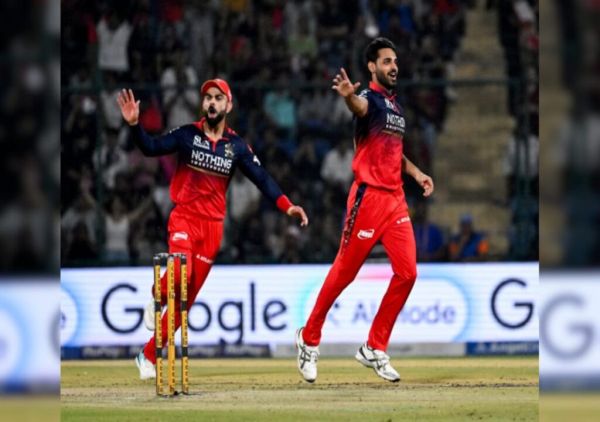
The top-order meltdown left fans stunned and even RCB stalwart Virat Kohli visibly ecstatic on the field as wickets tumbled at an unprecedented rate.
Nightmare start for Delhi Capitals
Delhi Capitals’ innings began on a disastrous note, with Bhuvneshwar Kumar striking in just the second ball of the match. Debutant Sahil Parakh was bowled for a duck, setting the tone for what would become a historic collapse.
In the following over, Josh Hazlewood joined the carnage, dismissing KL Rahul for 1 and Sameer Rizvi for a first-ball duck. Within just 1.2 overs, DC were reeling at 2/3.
The nightmare only worsened as Bhuvneshwar returned to remove Tristan Stubbs (5) and skipper Axar Patel (0) in quick succession. Soon after, Hazlewood picked up Nitish Rana, reducing DC to a staggering 8/6 in just 3.5 overs.
Worst powerplay in IPL history
By the end of the Powerplay, Delhi Capitals crawled to 13/6 — the lowest six-wicket score ever recorded in the first six overs of an IPL innings. The sheer scale of the collapse highlighted RCB’s bowling dominance and DC’s batting fragility.
This was only the second instance in IPL history where a team lost six wickets within the Powerplay. The previous occurrence dates back to 2011, when Kochi Tuskers Kerala slumped to 29/6 against Deccan Chargers.
Bowlers run riot for RCB
RCB’s pace duo of Bhuvneshwar Kumar and Josh Hazlewood were virtually unplayable under the conditions. Bhuvneshwar’s impeccable line and swing troubled the batters early, while Hazlewood’s bounce and accuracy compounded DC’s misery.
Bhuvneshwar finished with exceptional figures of 3/5 in three overs, while Hazlewood returned with 4/12 in 3.3 overs. Their combined effort accounted for seven of the ten wickets, making it one of the most destructive new-ball spells in IPL history.
Support came from Rasikh Salam Dar, Krunal Pandya and Suyash Sharma, who picked up a wicket each to wrap up the innings.
Resistance from lower order
Amid the chaos, Abishek Porel showed resilience with a fighting knock of 30 off 33 balls, attempting to stabilise the innings alongside David Miller.
Miller contributed 19 runs, while Kyle Jamieson added 12, helping Delhi Capitals reach a somewhat respectable total of 75 in 16.3 overs. Their efforts ensured that DC avoided registering the lowest-ever total in IPL history.
Kohli’s animated reaction grabs attention
As wickets continued to fall, Virat Kohli’s animated celebrations became a talking point. Known for his aggressive and passionate on-field presence, Kohli couldn’t contain his excitement as RCB tightened their grip on the match with each breakthrough.
His reactions reflected the intensity of the moment and the significance of RCB’s bowling performance in dismantling the opposition so comprehensively.
RCB assert dominance early
The dominant bowling display effectively sealed the contest in the first six overs itself. Chasing a modest target of 76, RCB had little trouble completing the formalities later in the match.
The early breakthroughs not only demoralised the opposition but also showcased RCB’s strength as a well-rounded unit capable of delivering under pressure.
Conclusion
Delhi Capitals’ collapse to 13/6 in the Powerplay will go down as one of the most forgettable moments in IPL history. On the other hand, RCB’s ruthless bowling performance, led by Bhuvneshwar Kumar and Josh Hazlewood, stands as a benchmark for dominance in T20 cricket.
With players like Virat Kohli leading from the front with energy and experience, RCB look like strong contenders in IPL 2026. For Delhi Capitals, however, this match serves as a harsh reminder of the importance of composure and resilience in the shortest format of the game.

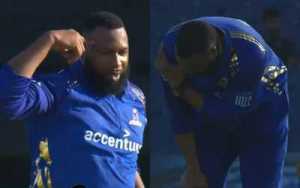
[Watch] Kieron Pollard hurts shoulder while celebrating Matthew Breetzke's wicket in MLC
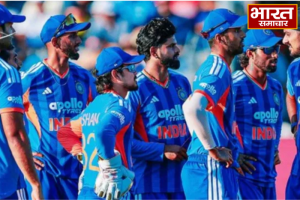
IND vs ENG: The last battle to save the captaincy… Today’s defeat will take away the number-1 crown… Will India’s empire be saved?

England vs India 5th T20I LIVE: Toss Delayed As Team India Is Stuck In Traffic In England
England vs India 5th T20I LIVE: Toss Result & Confirmed Playing 11