

Sandy Verma
Tezzbuzz|12-05-2026
Punjab Kings’ IPL 2026 campaign has gone from cruise control to mild panic in the space of four matches. For a major part of the season, Shreyas Iyer’s side looked like one of the most settled teams in the competition.
They were unbeaten after their first seven games, occupied a top-two spot for long stretches, and seemed well placed to build on their runners-up finish from IPL 2025. But four defeats in a row have changed the tone completely.
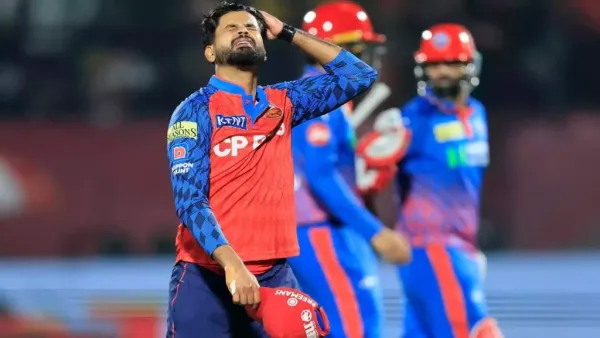
Monday’s loss to Delhi Capitals in Dharamsala was especially damaging because PBKS had 205 on the board and still could not defend it.
The playoffs remain firmly within reach, but Punjab have turned what looked like a calm qualification march into a sweaty calculator session.IPL 2026: DC defeat exposes Punjab Kings’ biggest problem
Delhi Capitals stayed alive in the playoff race by pulling off a stunning chase against PBKS. Punjab posted 205 for 5 on a pitch that had help for the quick bowlers, but Delhi overcame a poor batting powerplay and stormed home through the middle and death overs. Axar Patel, David Miller and Ashutosh Sharma changed the game, leaving Punjab with another painful defeat to process.
This was the ninth time Punjab Kings failed to defend a 200-plus total in IPL history. That number says a lot about the franchise’s long-standing problem, but IPL 2026 has made it even sharper. PBKS have now conceded seven 200-plus totals in 10 outings this season, equaling an IPL record for most 200-plus scores conceded by a team in a single edition. They also gave up 195 for 6 against Mumbai Indians earlier in the tournament, which tells you this is not a one-night issue.
Their batting has done its job regularly.
The problem is that the bowlers have not backed it up enough, and the fielding has also slipped at important moments. When a team keeps making 200 look defendable only in theory, eventually the table starts to bite.
Where PBKS stand in the IPL 2026 points table
Despite the four-match losing streak, Punjab Kings are still in the top-four conversation.
They are currently fourth with 13 points from 11 matches. That means their playoff fate is still in their own hands, but the margin for error has reduced.They missed the chance to return to the top of the points table by losing to Delhi Capitals. Instead of strengthening their top-two claim, they have been pulled back into the mid-table logjam. RCB, SRH and GT are better placed near the top, while teams below Punjab still have enough time to make the race uncomfortable.
This is where Punjab must be careful. A team that looked like it was racing ahead is now being chased. The situation is not disastrous yet, but it is delicate. Four losses in a row can damage more than just points; it can shake the dressing-room calm too.
PBKS remaining matches in the IPL 2026
Punjab Kings have three league games left in IPL 2026:
vs Mumbai Indians
vs Royal Challengers Bengaluru
vs Lucknow Super Giants
Two of these fixtures will be played in Dharamsala, a venue where Punjab have struggled badly. Since 2023, PBKS have won only one of six IPL matches in Dharamsala. That is not exactly fortress territory; it is more like a rented apartment with suspicious plumbing.
The RCB game is the toughest on paper because Bengaluru are among the strongest teams this season. MI and LSG are placed near the bottom and are already out of the playoff race, but that does not make them harmful. Eliminated teams often play with freedom, and LSG have breached 200 in each of their last three outings. For a Punjab attack that keeps leaking big totals, that is not comforting.
How PBKS can qualify for IPL 2026 Playoffs
Punjab’s qualification equation is still fairly simple if they start winning again.
If PBKS win all three remaining matches, they will finish on 19 points. That would guarantee qualification and could even keep them in the top-two race, depending on how RCB, SRH and GT finish.
If PBKS win two of their last three matches, they will move to 17 points. That should be enough to secure a playoff berth. In most IPL seasons, 16 points is considered a strong qualification mark, so 17 would leave Punjab in a very good position.
If PBKS win one match and one of the other games is washed out, they can reach 16 points. That could still be enough, especially if their net run rate remains healthy and other results go their way.
If PBKS win only one of their remaining three games and lose the other two, they will finish on 15 points. That is risky. They would still have a chance, but qualification would depend heavily on other teams losing and NRR staying in their favour.
If PBKS lose all three remaining matches, they will be stuck on 13 points and almost certainly miss out. That would have been a brutal collapse after such a strong start.
IPL 2026: Why two wins are the magic number
For Punjab, the target should be two wins. That takes them to 17 points and removes most of the nervous arithmetic. One win keeps them alive but drags them into scoreboard-watching territory. Three wins would be ideal, but given their current form, they first need to stop the losing streak before dreaming too far ahead.
The key issue is not whether Punjab can score runs. They have enough batting depth and firepower. The key is whether they can defend totals or control chases. Their bowlers have had a dismal second half of the tournament, and fielding lapses have made things worse.
If PBKS want to qualify, they need their bowling group to rediscover discipline immediately. Arshdeep Singh, Marco Jansen, Yuzvendra Chahal, Ben Dwarshuis and the support bowlers cannot keep allowing games to drift after the batters have done their job. At this stage of the IPL, 205 should not feel like a polite invitation.
The good news is that PBKS are not dependent on miracles yet. Their campaign has wobbled badly, but it has not collapsed beyond repair. Win two of the last three, and the playoff spot should be theirs. Win all three, and the top-two dream may still have life. Lose two or more, and things could become genuinely messy.
Punjab’s story right now is simple: the batting is playoff-ready, the bowling is asking too many awkward questions, and the fielding needs to stop donating lives like a charity drive. They are still in control, but only just. The next three games will decide whether their brilliant start becomes a platform for qualification or a painful what-could-have-been season.





Gujarat Titans celebrate Mother’s Day with heartfelt tribute

IPL 2026: Delhi Capitals Captain Axar Patel Penalized Rs 12 Lakh After Beating PBKS

Axar Patel Fined After DC’s Slow Over-Rate Win Keeps IPL 2026 Playoff Hopes Alive

'You Have Got To Bowl Him In Middle Overs': Mukund On Chahal's Snub