
Samira Vishwas
Tezzbuzz|26-05-2026
Modern T20 cricket increasingly resembles the volatility, psychology and logic that define the stock market. Certain players behave like volatile small-cap stocks capable of exploding overnight; others carry the trust and reliability of blue-chip giants; while a few quietly compound value across an entire season before investors fully recognise their worth.
Cricket remains the nation’s emotional heartbeat, and naturally, T20 investing can often become emotion-driven. At times, supporters behave exactly like first-time retail traders entering the market, chasing momentum, hype and viral performances. But seasoned investors usually operate differently. They trust patterns, consistency, proven pedigree and long-term returns over temporary spikes.
And in today’s game, fantasy cricket platforms have effectively become the trading floor where millions of supporters invest daily in hype, trust, momentum and returns. If price movement and trading volume shape investor behaviour in financial markets, then runs, wickets, strike rates and consistency dictate valuation in fantasy cricket.
IPL’s official fantasy platform functions much like a trading portfolio. Every investor receives a fixed capital of 100 credits to build a squad of 11 players, each assigned a market value in credits. The challenge lies in portfolio balancing, identifying undervalued assets, managing risk, and making the right leadership calls through captain and vice-captain picks, where returns are multiplied.
Kohli or Sooryavanshi: who became IPL 2026’s best stock?
The IPL 2026 season is not yet over, but the larger part of the market cycle already is. After 74 dramatic league-stage clashes filled with momentum swings and valuation crashes, the tournament is down to four teams heading into the playoffs.
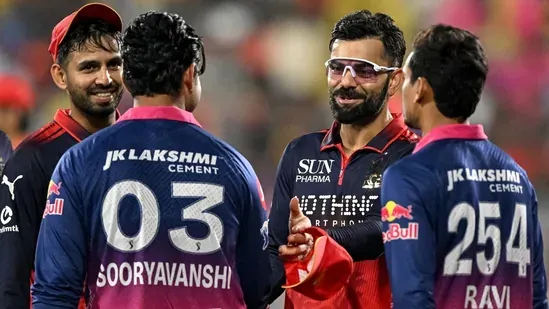
And at the close of the league phase, 15-year-old Vaibhav Sooryavanshi has emerged as IPL 2026’s hottest trading stock.
The teenage sensation amassed 583 runs in 14 league matches at a staggering strike rate of 232.27, including a 36-ball century and a blistering 38-ball 93, while smashing 53 sixes across the campaign. But his biggest surge perhaps came not just on the field, but on fantasy trading floors disguised as cricket platforms.
Sooryavanshi was selected in 46.47 per cent of teams — the highest for any player this season — while 13.36 per cent of users were bold enough to make him captain, the second-highest figure overall. In stock market terms, he became the high-risk, high-reward growth stock investors simply could not stop buying into.
Yet, when it came to trust, investors still leaned towards Virat Kohli, fantasy cricket’s equivalent of a Tata-style blue-chip giant.
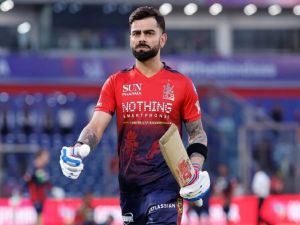
No batter in IPL history has produced more 500-plus-run seasons than Kohli, and investors once again banked on his reliability. For the ninth time in his career — and fourth consecutive season — he crossed the 500-run mark, compiling 557 runs in 14 innings with four fifties and a century.
Kohli was the second-most selected player this season with a 41.93 per cent ownership share, but more significantly, he remained fantasy cricket’s most trusted captaincy stock. He was appointed captain in 15.73 per cent of teams — the highest for any player this season.
And then came the market’s ultimate wealth creator.
Above both Sooryavanshi and Kohli stood Virat Kohli’s India teammate Shubman Gill, the premium mid-cap compounder that quietly generated the strongest returns.
Gill was selected in barely around 17 per cent of teams and captained only around 2.5 per cent of the time, but he delivered a league-leading 989 fantasy points — 66 more than Sooryavanshi, while Kohli finished ninth on the overall returns chart with 880 points.
For the second consecutive season, Gill crossed the 600-run mark in the IPL. Dropped from India’s T20 World Cup squad just six months earlier, the India Test captain responded with 616 runs at a strike rate of 161.67, including six half-centuries.
If Sooryavanshi represented IPL 2026’s speculative small-cap frenzy, and Kohli remained the dependable blue-chip market leader, Gill quietly became the elite mid-cap stock that ultimately generated the biggest wealth for investors who trusted long-term compounding over market noise.




Will Phil Salt play IPL 2026 Qualifier 1 today in Dharamshala? RCB best XI vs GT
IPL 2026: Virat Kohli will create this history today!
Mitchell Marsh Ruled Out Of PAK vs AUS ODI Series

SRH vs RR Eliminator - Who will be Impact Players for today's match?