
Samira Vishwas
Tezzbuzz|20-07-2026
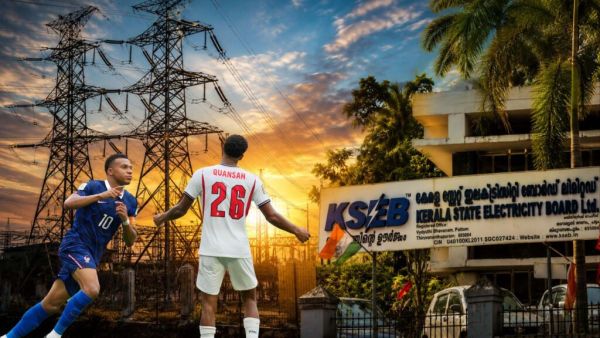
Kerala is grappling with a severe power crisis that has sparked widespread public outrage and become a major political test for its newly elected United Democratic Front (UDF) government. Sudden power cuts across the state have disrupted homes, businesses, and football World Cup screening events.
The current crisis marks a sharp political reversal for the state. In the Assembly election held in April, the Left Democratic Front (LDF), which was in power then, had campaigned heavily on its governance record, leaning on a simple, effective message: “Remember the UDF years? Remember the power cuts? Those dark days…We gave Kerala 10 years without load shedding.”
Also read: Messi, Yamal and a World Cup final that feels like football’s passing of the torch
The message cut no ice as the electorate brought the Congress-led alliance back to power after a decade. Within months of the political transition, the familiar spectre of power cuts has returned, forcing the new administration to defend its management of the state’s energy supply.
Missed World Cup moments make power outages worse
The government has attributed the situation to a combination of weak monsoon rainfall, sharply rising temperatures and with that the demand for power, and a nationwide scarcity of electricity. With power exchanges unable to supply enough electricity except at exorbitant prices, the Kerala State Electricity Board (KSEB) is struggling to balance the grid.
But politics is driven by public experience rather than administrative explanations, and the timing of these blackouts has intensified public resentment. To make matters worse, the outages have happened when high FIFA World Cup fever has gripped the state. Disruption of matches not only left the football lovers angry but also hurt occasions that normally transform Kerala’s evenings into vibrant community gatherings.
With football fans wearing jerseys of popular teams such as Argentina and Brazil to watch matches together, unexpected power cuts have provoked immediate fury. Angry residents have marched to local KSEB offices after midnight, while social media is flooded with videos of fans shouting at officials after missing crucial match moments.
Rising energy demand
The irony of the crisis is that it is unfolding during the monsoon season, a time when Kerala’s reservoirs are typically replenished. Instead, temperatures remaining four to five degrees above normal have driven continuous usage of fans and air conditioners.
Daily electricity consumption has surged to nearly nine crore units, far exceeding KSEB’s projections for July and creating a peak-hour deficit of nearly 1,000 megawatts. While initial restriction plans targeted 15 to 30 minutes, consumers report that blackouts are lasting close to an hour.
Also read: Messi can beat Mbappe to Golden Boot without scoring WC final hat-trick: Here is how
The electricity board warns that restrictions could persist on rainless days until December if weak rainfall continues and additional power cannot be secured. Long-term, round-the-clock contracts demanded by outside producers remain financially difficult for Kerala, which primarily needs power during evening peak hours.
KSEB under pressure as opposition mounts attack
To manage the immediate shortfall, the KSEB is attempting to procure an additional 200 megawatts from the National Thermal Power Corporation (NTPC) and other generators. Meanwhile, the LDF’s old campaign slogan has made a return, constantly reminding the government that uninterrupted electricity was once a benchmark of state governance.
The opposition claims that the government should have anticipated the shortages months in advance and contracted additional power earlier. For ordinary citizens, students, and struggling local businesses, these political debates offer little comfort as everyday life grinds to a halt during blackouts.
Amid the tension, the KSEB chairman assured the public that additional electricity will be purchased to guarantee an uninterrupted broadcast for the Argentina-Spain World Cup final that starts after midnight on Sunday (July 19). This exceptional assurance highlights the severity of the crisis and the pressure mounting on the administration.
Conspiracy theories
Adding to the challenge is a growing narrative on social media alleging that the shortages are being artificially maintained. Speculation suggests the crisis is meant to build public acceptance for greater private participation in electricity distribution, with some even linking it to Adani Power.
Also read: Welfare state to market reforms? Kerala white paper signals economic shift
There is currently no evidence in the public domain to substantiate these claims, which remain unverified speculation akin to a conspiracy theory. However, the traction these rumours are gaining highlights a deeper issue of public distrust that the new government must now confront.




ENG vs IND 2026: England vs India, 3rd ODI - Who Said What?

ENG vs IND 2026: England vs India Highlights & Review – 3rd ODI

Rohit Sharma scores a historic Lord's century with Shardul Thakur's bat

Messi can beat Mbappe to Golden Boot without scoring WC final hat-trick: Here is how