
Oliver Trescombe
sportsseier|22-07-2026
Identifying a new leader for England’s red-ball team is proving anything but simple, with Ben Stokes stepping away and Brendon McCullum still in the picture.
As England’s men disperse for the Hundred, preparing to don fresh kits, impress new employers and overuse the word “exciting”, those overseeing them might just breathe a quiet sigh of relief.
Yet, not everything is in perfect order heading into this mid-season break. Test cricket remains the pre-eminent format in England – the favourite across all ages and backgrounds, as Richard Gould, chief executive of the England and Wales Cricket Board, noted in his Ashes debrief in March – but the opening half of the summer has been far from smooth sailing.
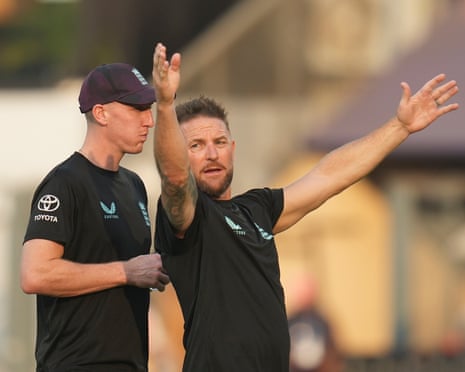
The 2-1 series loss to New Zealand led to Brendon McCullum being stripped of part of his dual coaching duties, while an exhausted Ben Stokes threw in the towel and was last seen turning out for Durham against Northumberland before a crowd of 300 at Allendale Cricket Club. Three Tests after Gould and Rob Key reaffirmed that sticking with the current structure, with a touch more intensity, was the answer, England now find themselves without both a coach and a captain.
Still, England’s T20 and ODI victories over India – the top-ranked side in both formats – should not be dismissed. McCullum’s retention as white-ball coach was divisive, but over the last year he and Harry Brook appear to have developed a promising partnership in leadership.
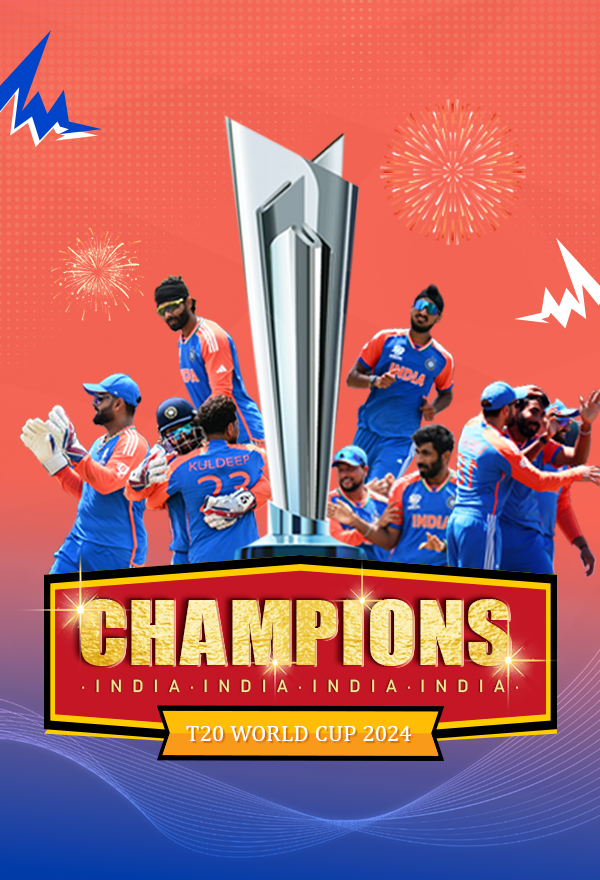
India did, of course, take the opportunity to overhaul their world champion T20 line-up, and a 4-0 drubbing showed that the reset was overzealous. Yet England’s 2-1 one-day series win, achieved after coming from behind, revealed genuine resolve – with triumphs in Cardiff and at Lord’s earned in very different circumstances.
Cardiff’s low-scoring scrap owed much to Joe Root’s enduring class, while Lord’s produced a run-fest on an unusually benign surface. England’s ability to adapt – aided, admittedly, by Jasprit Bumrah’s absence from the decider – underlined the depth and flexibility they have built.
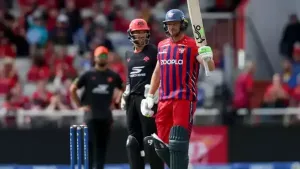
Despite having fallen behind in the 50-over game since their 2019 World Cup triumph, Brook now leads a well-balanced side. His batting order combines finesse and power, right- and left-hand options, and variety in approach. At Lord’s he had eight distinct bowling resources: three pace bowlers, a wrist-spinner, a left-arm seamer, two effective part-time off-spinners, and Jacob Bethell offering a contrasting spin option.
Brook’s handling of Bethell in particular reflected his rapport with McCullum. Having sought mid-innings advice, he was told to use a spinner who could pound the ball into the surface in the style of Ravindra Jadeja – a move that paid off when Rohit Sharma, on 138, was dismissed in a pivotal moment.
Here, though, lies the complication, bringing us back to England’s awkward position. While success in the short formats has softened the frustration caused by their Test decline, it risks deepening a divide that could become difficult to bridge once new Test leadership is appointed.
Currently, the captaincy options appear limited to Root and Brook. Root would return out of obligation rather than enthusiasm, while Brook, though an exciting prospect, would be inexperienced. Both would require firm direction from the incoming coach – Root because he lacked it previously, and Brook because he is still learning.
In an ideal scenario, Stokes would have continued until the 2027 Ashes, allowing Brook more time to mature as vice-captain before taking over post-World Cup. But this is far from an ideal world. Early promotion for Brook would raise questions about his readiness both on and off the field, yet it still feels like the forward-thinking move.
However, the strain of captaining across all formats would be immense, and managing this under two different coaches presents obvious challenges. Whoever takes charge of the Test side must work closely with McCullum to avoid burdening Brook with conflicting philosophies.
Andy Flower, regarded as one of the best coaches in the world, declined the role last week, citing clashes with his two franchise commitments. Practicalities aside, one wonders whether he also recognised the structural constraints inherent in the role.
While the position remains prestigious, any potential candidate will surely note that, apart from Stokes – the player any coach would covet – no one has departed. The task is to extinguish the lingering flames from the failed Ashes while collaborating with many of those who helped ignite them.
This all traces back to the March tour review, which ultimately kept most personnel intact, appointed Marcus North as a selector (though not head selector), increased coaching staff numbers, arranged quarterly meetings with county coaches, and rewarded domestic form by picking Emilio Gay. Even Ollie Robinson made a fleeting return for one Test.
Had more substantial reform been pursued then – perhaps approaching Flower with the offer of a clean slate – Stokes might have found renewed motivation at the start of the summer rather than being disillusioned by an environment he no longer trusted.
Perhaps Gould and Key will yet uncover the right figure to make this dual structure function. Despite the boost of recent white-ball series wins and the upcoming month of high-energy entertainment, they cannot afford further missteps in the format that remains England’s foundation.

Abhishek Sharma vs Sanju Samson: Who Deserves To Open With Vaibhav Sooryavanshi In T20Is?

Arshdeep Singh's Girlfriend Samreen Kaur: Career, Dating History And Love Story
Shreyas Iyer Urges Team India To Level Up After Clinical Zimbabwe Series Sweep
Vaibhav Suryavanshi revealed the secret of his success, said – the goal was to give a good start to the team