Samira Vishwas
Tezzbuzz|03-08-2026
After 11 days of intense competition, Glasgow Commonwealth Games concluded with the flag and baton handed over to India, hosts of the Centenary edition, in a glittering ceremony on Sunday (August 2).
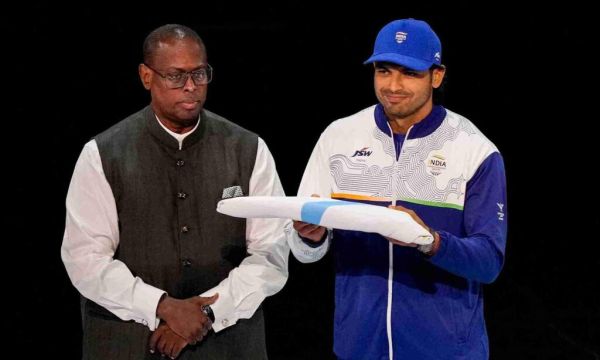
The 2030 Games will be held in Ahmedabad, and the Scotland officials handed over the CWG flag and baton to Indian representatives—Olympic gold medallist Neeraj Chopra, IOA president PT Usha, and Gujarat Deputy Chief Minister Harsh Sanghavi.
India will become only the second nation after Australia to host the Commonwealth Games on multiple occasions, having previously organised the 2010 edition in New Delhi.
Also read: CWG 2026: Boxers shine with record 7 golds; judokas, para athletes script history
Formal handover to India
Prince Edward, Duke of Edinburgh, representing King Charles III, formally declared the Games closed. “Thanks for the manner in which you have competed, officiated, supported, organised the Games. You have once again brought the spirit and value of Commonwealth tonight. Thank You Glasgow,” he said.
“I call up on athletes of all countries and territories to come to Ahmedabad, India in four years’ time to celebrate the 24th Commonwealth Games in what will be the centenary of the Games,” he added.
The formal handover began with the Commonwealth Games flag making its symbolic journey across the arena.
Led by bearers holding the Scottish and Indian flags, the procession lowered the folded Games flag. Glasgow’s Lord Provost Jacqueline McLaren then passed it to Commonwealth Games Scotland vice-chair Susan Jackson, Scottish netball player Emily Nicholl, Commonwealth Sport president Dr Donald Rukare, two-time Olympic medallist Neeraj Chopra, Indian Olympic Association president PT Usha, and finally Gujarat Deputy Chief Minister Harsh Sanghavi. This marked the official transfer of hosting responsibilities from Scotland to India.
India’s boxer Jaismine Lamboria carries the country’s national flag during the closing ceremony of the 23rd Commonwealth Games, at OVO Hydro, in Glasgow, Scotland, Sunday. PTI Photo
Closing ceremony
Jaismine Lamboria carried India’s flag at the closing ceremony after winning gold in the women’s 57kg category boxing competition.
The ceremony began showcasing the cultural intricacies of Scotland but soon transformed into a vibrant display of India’s cultural diversity and ancient tradition.
The Indian presentation unfolded over three acts, taking the audience on what organisers described as a journey celebrating shared values, culture and connection.
The overarching message was rooted in the ancient Indian philosophy of Vasudhaiva Kutumbakam (The World is One Family), a theme that resonated strongly with the Commonwealth’s ideals of unity and friendship.
Three acts by India
The opening act also commemorated 150 years of Vande Mataram, India’s national song, with a sweeping choreography led by actor Manushi Chhillar.
Set against immersive digital visuals, hundreds of dancers painted a vivid portrait of India’s diversity while maestro Shankar Mahadevan’s stirring score fused orchestral grandeur with Indian musical traditions.
Also read: Beyond medals: India’s chess boom fuels global demand for its coaches
A specially produced film introduced international audiences to Ahmedabad. The film presented sport as an inseparable part of Indian life, while Gujarat was portrayed as a place where centuries-old heritage intersects with innovation and urban ambition.
The second act celebrated perhaps the strongest cultural bridge between the outgoing and incoming hosts—music. Titled “The Cultural Jugalbandi”, the segment paired internationally acclaimed Indian sitar virtuoso Rishab Sharma with celebrated Scottish musician Ross Ainslie.
The dialogue between Sharma’s sitar and Ainslie’s Scottish pipes and whistles became a symbolic conversation between two ancient musical traditions.
David Dixon Award
The finale belonged to Shankar Mahadevan, who returned to the stage alongside his sons Siddharth and Shivam for a concert that travelled through some of India’s most recognisable songs, including Suno gaur se duniya walon, Bhaag Milkha, Ae watan watan, and Lehara do. Gujarati playback singer Bhoomi Trivedi added a special tribute to the host state, ensuring Gujarat occupied centre stage before welcoming the Commonwealth in four years’ time.
The Indian showcase followed Glasgow’s farewell celebration featuring Scottish music, poetry and dance.
Scotland’s wheelchair racer Melanie Woods won the David Dixon Award, which is given to the outstanding athlete of the Commonwealth Games, based on their performance, fair play and overall contribution to their team’s participation at the Games.
India finishes fourth
India signed off from the Games ranking fourth in the medals haul with 39 podium finishes despite competing in a significantly trimmed sporting programme that excluded some of its traditional strongholds.
India won 13 gold, 17 silver and 9 bronze medals. Australia topped the table with 171 medals, including 70 gold, while England (110 medals), and Canada (62) were second and third respectively.
Also read: CWG 2026: Neeraj Chopra wins javelin throw silver, bronze for Yashvir
Hosts Scotland ended fifth with a total of 39 medals, same as India but with fewer silver medals.
The Indian contingent produced a series of standout performances over the 11-day competition in Glasgow, collecting medals across disciplines such as boxing, athletics, judo, para sports, and weightlifting to reinforce its status as one of the Commonwealth’s sporting powerhouses.
India’s strengths
Boxing emerged as one of India’s biggest contributors, accounting for 10 medals, including seven gold and three silver, while many track and field and para athletes too produced a string of podium finishes.
While the boxers delivered consistently, the judokas added crucial medals to the tally.
Although the absence of sports such as shooting, badminton, wrestling, hockey, and table tennis, along with the reduced overall programme, affected India’s medal prospects compared to previous editions, the contingent adapted well to the changed landscape and remained among the most successful teams at the Games.
Also read: Gujarat’s blueprint for 2030 CWG: Land acquisition, new stadiums, mass evictions and infra upgrade
There were, however, a few disappointments, with India’s campaign suffering an early setback when judoka Tulika Maan was ruled out before the Games after being provisionally suspended for three whereabouts failures under anti-doping regulations.
With the Glasgow chapter coming to an end, India’s focus now shifts to the 2030 Commonwealth Games in Ahmedabad.
Ryan ten Doeschate Appointed as Knight Riders’ Head of Cricket Strategy
Indians at the Hundred, Matchday 12: Quiet day for Jemimah as Southern Brave earns comfortable win
FIFA abandons plans to sell World Cup profits to private equity
Could Hardik Pandya leave Mumbai Indians? No IPL 2027 trade talks yet, franchise says